Farway Journal
Cotton muslin: what it is and why it’s perfect for children
What cotton muslin is and why it’s the ideal fabric for babies and children: its properties, how it differs from double gauze, how to spot real quality and how to wash it. The complete guide to summer’s fabric.
25 June 2026
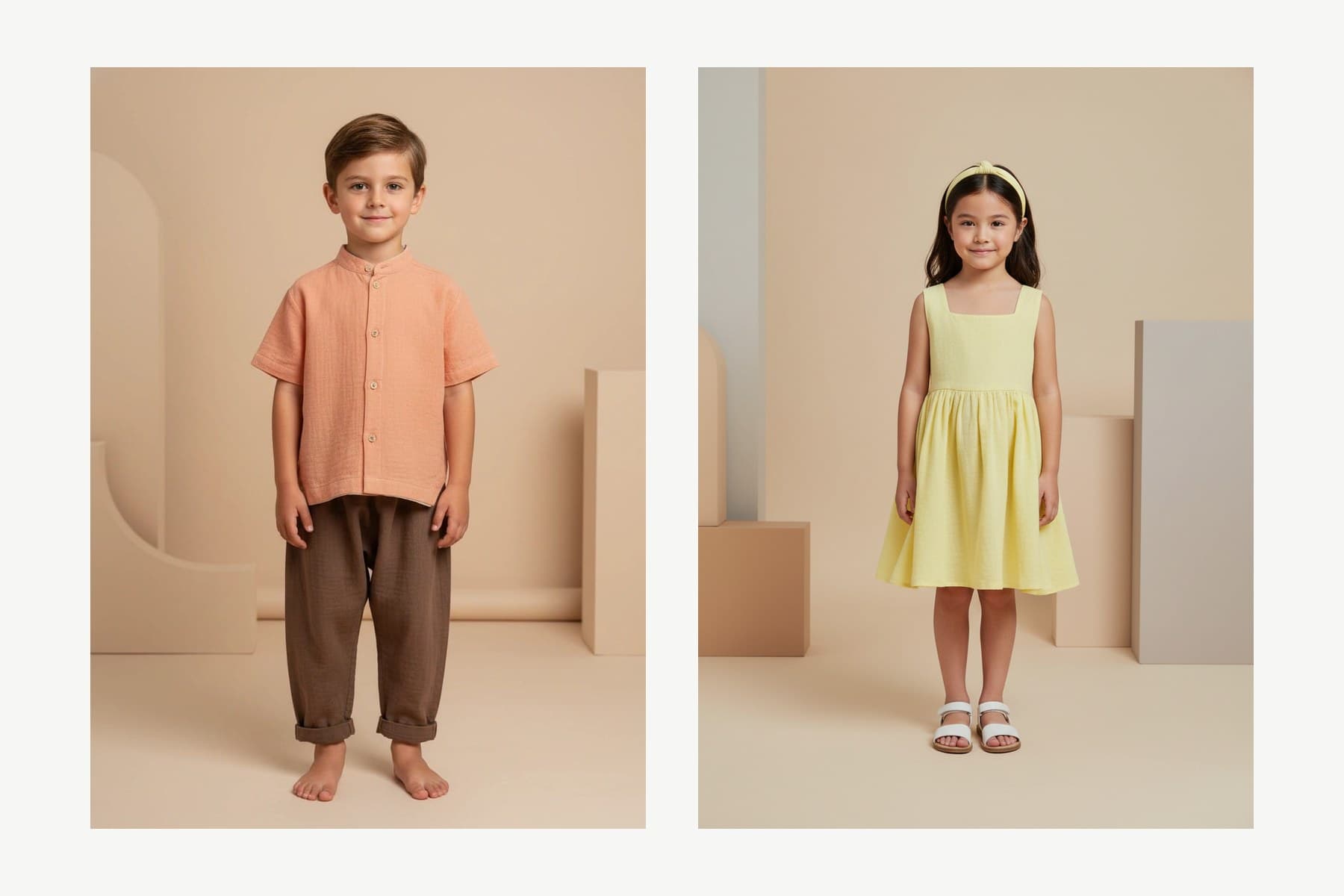
There’s a fabric that mums and dads learn to recognise at the first touch, and then look for ever after: cotton muslin. Light as a breath, soft from the very first wash — softer still with every wash that follows — it’s the fabric that has dressed children for generations, and today it’s back at the heart of the summer wardrobe.
In this guide we explain what muslin really is, why it suits children’s skin so well, how to recognise a good one and how to look after it.
In short:
- Cotton muslin is a light, open-weave fabric, breathable and soft, traditionally used for babies and children.
- It’s ideal in summer because it lets the skin breathe and dries quickly; double gauze makes it soft and lightly crinkled.
- It becomes softer with every wash: machine wash at low temperatures, no ironing needed.
- It’s the signature fabric of Farway Milano’s warm-weather pieces: cotton muslin dresses, shirts and trousers.
What is cotton muslin?
Muslin is a cotton fabric with a loose, light weave, made with a simple, open weaving structure: that is what gives it its airy handle, its delicate translucency and its ability to let air through. The name comes from the city of Mosul, from where the fabric reached Europe centuries ago; today “muslin” covers whole families of lightweight fabrics, and in childrenswear it almost always means cotton double gauze: two fine layers of gauze joined by invisible stitches, which create that characteristic crinkled, downy effect.
It’s a living fabric: not perfectly smooth, it moves, it breathes. And that is exactly its charm — and the reason it should never be pressed flat.
Why is muslin perfect for babies and children?
The answer lies in four properties you can feel against the skin:
- Breathability. The open weave lets air circulate: skin stays cool on hot days and sweat evaporates instead of sitting against the body. That is why it is the summer fabric par excellence.
- Softness that grows. Muslin starts out soft and improves with use: every wash makes it softer. The most-loved pieces become, quite literally, nicer to wear over time.
- Lightness. It weighs almost nothing: children move freely, with no stiff layers getting in the way of play.
- Gentleness on the skin. Natural cotton fibre, with no rough surfaces, suits even the most reactive skin of the first months.
Then there is a quality parents discover early on: muslin forgives. The crinkled surface hides creases, small stains wash out easily, and the garment falls back into shape as it dries on the line, with no iron.
Muslin, double gauze, cotton gauze: what is the difference?
The three names often turn up together, and the confusion is understandable:
- Cotton gauze: the single layer, extremely light and semi-transparent — it is what the classic swaddling muslins are made of.
- Double gauze: two layers of gauze quilted together. This is the “muslin” of clothing: it gives proper cover, it is soft, and it has that typical puckered look.
- Muslin: the umbrella term that takes in both; on good children’s pieces it almost always means double gauze.
When you read “cotton muslin dress” on a Farway product page, it means double gauze: substantial enough to be a real dress, light enough to feel like party pyjamas.
How to recognise good-quality muslin
Not all muslins are the same. The signs to look for, by touch and by eye:
- A soft spring-back: squeeze it in your hand and let go — a good muslin opens back out soft, never papery.
- An even weave: held up to the light, the weave should be uniform, with no thin patches or pulled threads.
- Flat, clean seams: on a fabric this light the finishing shows immediately — precise hems and seams that do not pucker are the mark of careful making.
- The right weight: a double gauze meant for clothing has to give proper cover; if you can see through it like a curtain, it is single gauze for accessories.
- Colourfast, gentle shades: the dusty colours typical of muslin should hold up to washing without fading in patches.
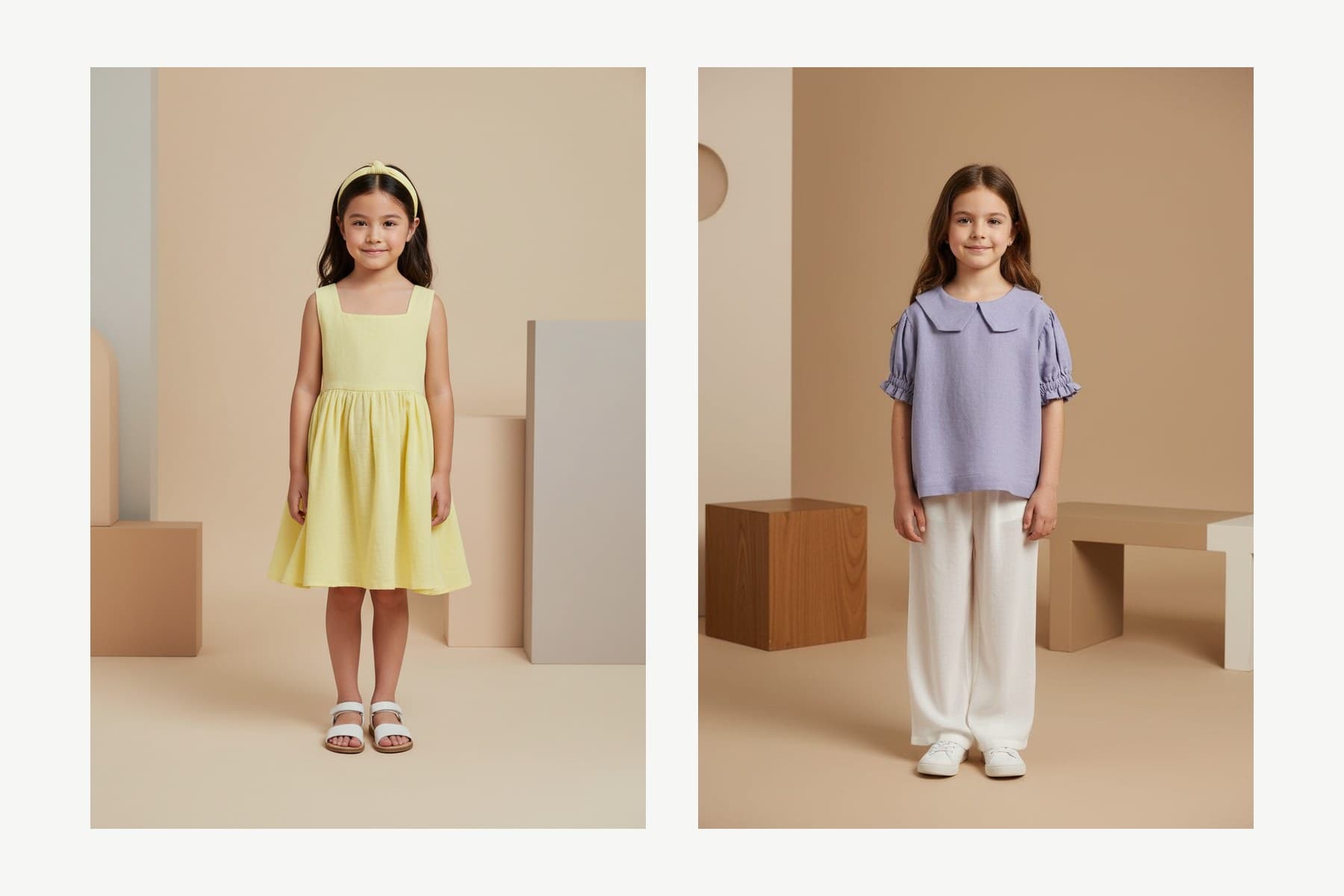
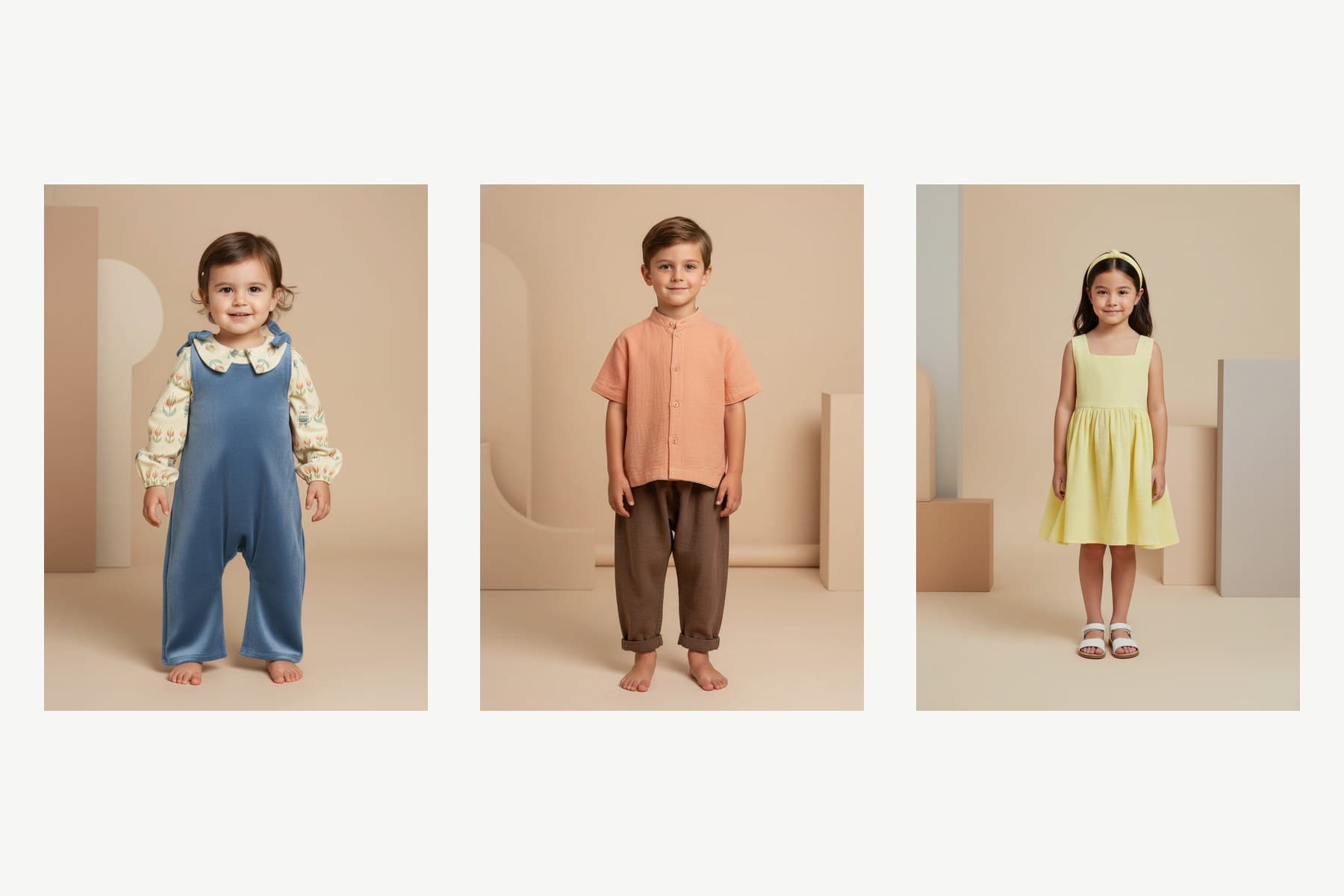
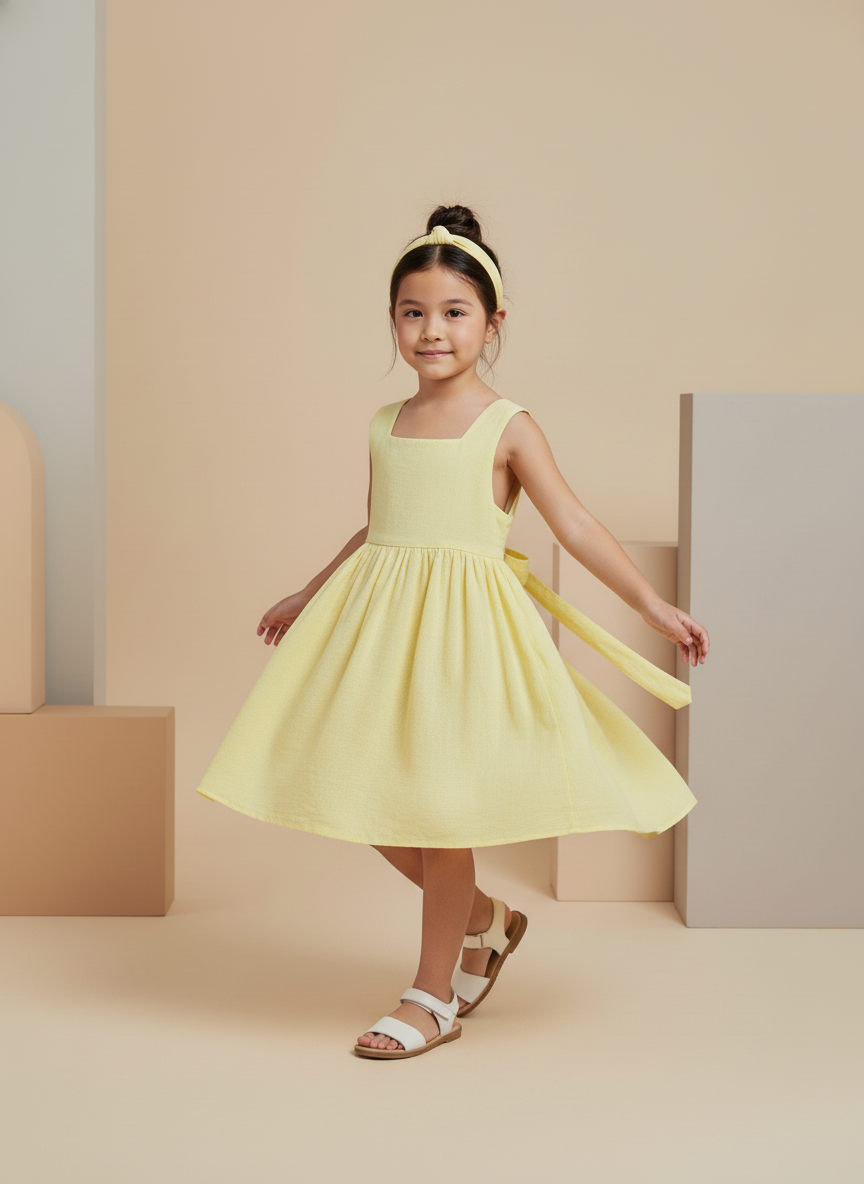
At Farway, muslin leads the summer collection: the Charlotte Dress for girls, the Mandarin Collar Shirt and the George Shirt for boys, through to full-length trousers and shorts. Pieces designed in Milan and made in small runs, where light fabric meets seams built to last.
When to wear muslin: seasons and occasions
Muslin is at its best from April to September: it is the fabric of days that turn warm, of summer evenings, of holidays. But double gauze is not only for the beach: with its crinkled, elegant look it dresses occasions beautifully too — a summer wedding, a family ceremony, the photographs that stay.
And in the in-between seasons it layers well: a muslin dress with a cardigan over the top carries you through September’s uncertain days without giving up on lightness.
How do you wash cotton muslin?
The short answer: machine wash at 30°C, delicate cycle, no fabric softener, line dry and no ironing. The long one:
- Wash at 30°C with a gentle detergent: the fibre stays intact and the colours last.
- No fabric softener: it flattens the natural crinkle; the softness arrives on its own, wash after wash.
- Moderate spin and air drying, in the shade where possible.
- Ironing: almost never necessary. If you really must, a warm iron with a cloth between iron and fabric — the puckered texture is a virtue, not a crease to remove.
The result of all this simplicity is concrete: muslin is the fabric that asks the least time of parents. Wash it, hang it, put it back on.
Frequently asked questions
Is cotton muslin suitable for newborns?
Yes, it is one of the most widely used fabrics for the first months: breathable, soft and natural. For a newborn’s delicate skin the making matters too — flat seams and labels that do not sit against the body — along with the quality of the cotton.
Does muslin keep you warm or cool?
It is a naturally temperature-regulating fabric: in summer it lets air through and keeps children cool; on cooler days double gauze holds a thin layer of air that shelters. That is why it works from mid-spring to early autumn.
Does muslin crease?
Its surface is naturally crinkled: the creases of everyday wear blend into the texture and disappear. It is the ideal fabric for a suitcase and for long days — there is no such thing as “creased” on a garment that starts out rumpled.
How long does a muslin garment last?
A good double gauze, washed with care, lasts whole seasons and passes down easily to a younger brother or a little cousin — getting softer all the while. The pieces that wear out early are almost always gauzes woven too thin or cheap making, not “muslin” itself.
What is the difference between muslin and linen for children?
Both are cool and natural. Linen is more structured and drier to the touch, muslin softer and more enveloping; linen holds its creases with character, muslin hides them. For the youngest, muslin wins on softness; from 4–5 years upwards they make a good pair to alternate.
Muslin, in the end, is a small lesson in style: the best things are light, simple and get better with time. All the Farway muslin pieces are in the shop — and in summer they lead almost every collection.