Farway Journal
Baby and children’s sizes: the guide with the charts to get it right
Baby and children’s clothing sizes explained properly: European charts from 0 to 12 years by height and age, how to measure your child, and the rules for choosing the right size — gifts included.
23 July 2026
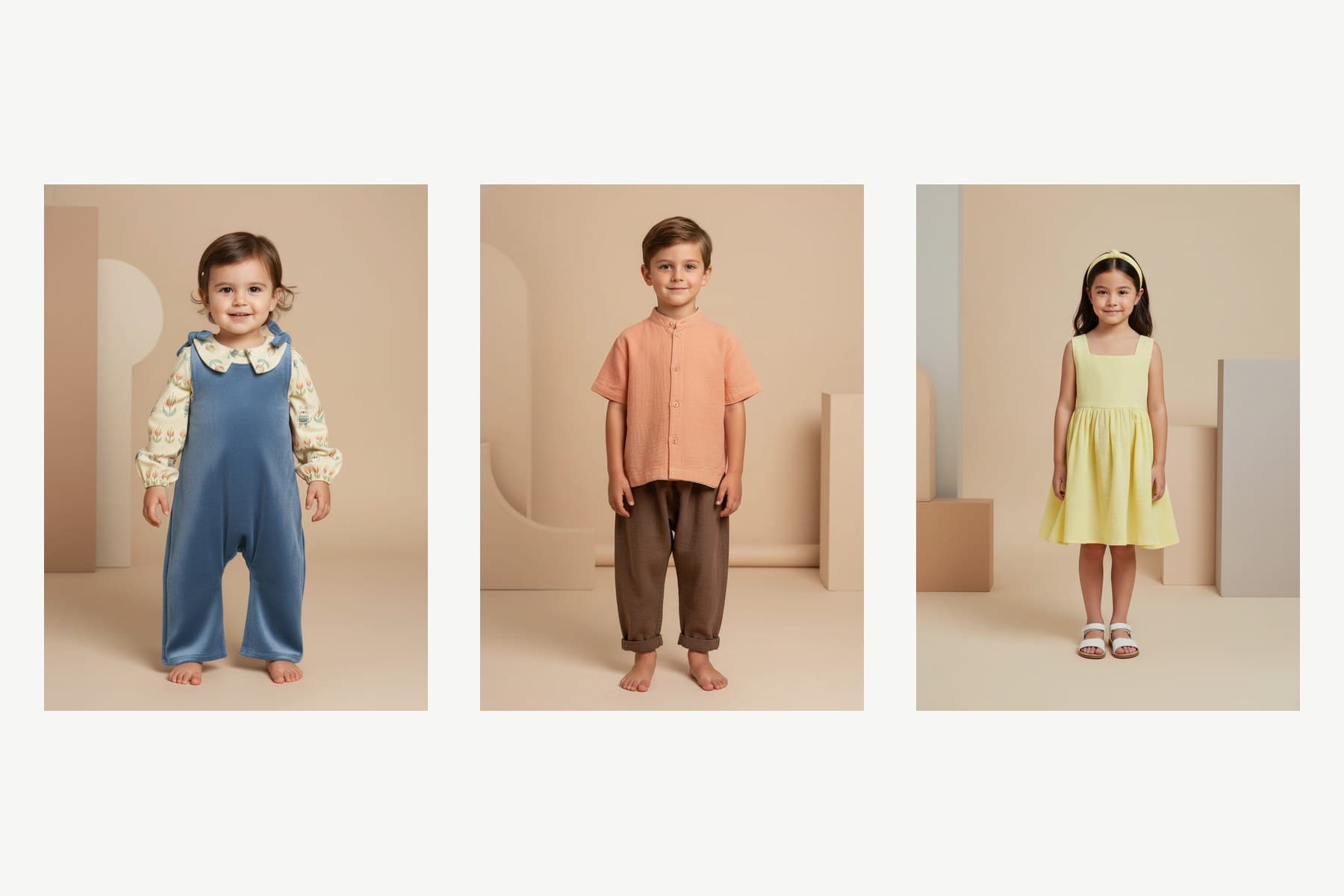
Sixty-eight? Seventy-four? Nine months that somehow fits like twelve? Baby and children’s clothing sizes are a small code to crack — and getting them wrong is the most widely shared experience of parenthood, alongside the odd sock.
This guide lines it all up: the European size charts from 0 to 12 years, how to measure a child without a wrestling match, and the practical rules for choosing the right size when you buy — or give — a garment.
In short:
- European children’s sizes follow height in centimetres (62, 68, 74…), not age: the age on the label is only an average guide.
- The universal rule of thumb: when in doubt, size up — children only grow in one direction.
- In the first year the size changes every 2–3 months; from 2 years on, roughly one size a year.
- For gifts: never today’s size — for a newborn choose 9–18 months, thinking about the season the baby will reach it in.
How do European children’s sizes work?
The European size number is the maximum height in centimetres the garment is designed for: a size 68 romper fits up to around 68 cm tall. That is why it is the most reliable system: age is a statistical average, height is a measurement.
Two nine-month-olds can quite happily wear a 68 and an 80: both perfectly fine, simply different. When a garment says “9 months”, it is saying “for the average 9-month-old” — who, like every average child, does not exist.
Baby size chart (0–24 months)
| EU size (cm) | Approximate age | Approximate weight |
|---|---|---|
| 50 | Birth | 3–3.5 kg |
| 56 | 0–1 month | 3.5–4.5 kg |
| 62 | 1–3 months | 4.5–6 kg |
| 68 | 3–6 months | 6–8 kg |
| 74 | 6–9 months | 8–9.5 kg |
| 80 | 9–12 months | 9.5–11 kg |
| 86 | 12–18 months | 11–12.5 kg |
| 92 | 18–24 months | 12.5–14 kg |
The values are indicative: every child grows at their own pace, and that is exactly how it should be. The advice from maternity wards: very few pieces in size 50–56 — some babies skip them altogether.
Boys’ and girls’ size chart (2–12 years)
| EU size (cm) | Approximate age |
|---|---|
| 98 | 3 years |
| 104 | 4 years |
| 110 | 5 years |
| 116 | 6 years |
| 122 | 7 years |
| 128 | 8 years |
| 134 | 9 years |
| 140 | 10 years |
| 146 | 11 years |
| 152 | 12 years |
From 2 years on the pace slows: on average 5–6 cm a year, which is roughly one size. But growth spurts are real and arrive without warning — usually the day after a whole new wardrobe has been bought.
How to measure a child (without them running off)
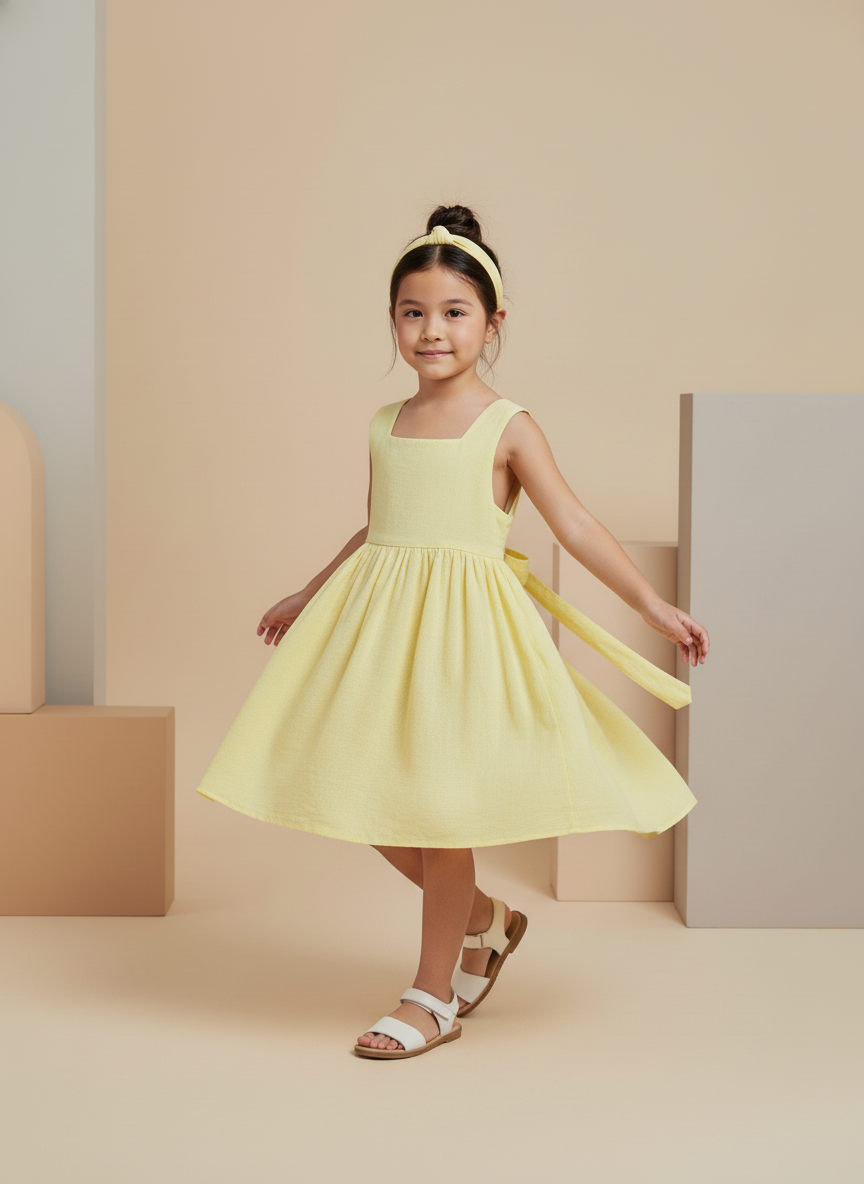
The two measurements that really matter:
- Height: barefoot, against a door, a book on the head, a pencil mark. Up to 2 years you measure lying down — a two-adult job.
- The reference garment: the tailor’s trick. Take the piece that fits perfectly today, lay it flat and measure it; compare it with the measurements on the product page. It is the most precise method for buying online, because it measures the garment, not a child in motion.
For Farway pieces, consult the size and fit information for the individual style. General charts help you get started; check the product page before choosing.
The golden rules for getting the size right
- When in doubt, go up. A roomy size today is perfect tomorrow; a tight size is already destined for the drawer.
- Think about the season it lands in. A summer piece in size 86 is only useful if your child will be wearing an 86 in summer: the calendar counts as much as the centimetre.
- Pieces with clever room to grow last longer: elasticated and adjustable waists, sleeveless styles to layer, generous cuts like those in muslin that carry a child through two seasons.
- For gifts: always look ahead. For a newborn, give 9–18 months (we cover it in our new baby gift guide); for a child turning 4, a 110. You will land it right.
- Bodysuits and underwear in the exact size, outer pieces with room to spare: what sits against the skin needs to fit closely, what goes over it can follow the child’s growth.
Different sizes, same child: why it happens
The same child can wear a 92 from one brand and a 98 from another: the charts are standard, the fits are not. Every label cuts to its own style — slim, regular, roomy — and handmade pieces often carry more fabric and more room than industrial ones. The answer is always the same: trust the garment’s centimetres, not the number on the label.
Frequently asked questions
What size should I buy for a baby who is not born yet?
Almost everything in 62 and 68, very little in 56, almost nothing in 50. A 62 fits on average from the first to the third month — the stretch when you need the most changes — and a 68 takes you up to six. If the scan promises a sturdy baby, start straight from the 62.
Is it better to buy clothes big “so they grow into them”?
A little room can be useful, but an oversized piece can be uncomfortable. Check sleeves, shoulders and hem, and compare the style’s guide before choosing a larger size.
Are age-based sizes from different brands comparable?
No: “4 years” is not a measurement but an estimate, and it changes from label to label. The comparable figures are the centimetres (98, 104, 110…) and, better still, the flat measurements of the garment on the product page.
How do I handle the change of season with sizes?
The end-of-season ritual: try the whole wardrobe on in half an hour, sort the pieces into “still fine”, “one last round” and “to pass on”, then make a targeted list of what is missing in the new size. The pared-back approach to the baby layette works at any age: better a few right pieces than a drawer that will not shut.
Do Farway pieces fit true to size?
Fit can vary from one style to another. Check the chosen piece’s size and fit information rather than relying on age alone.
Sizes, in the end, are only numbers in the service of one thing: children free to move, in clothes that are waiting for them. For everything else there is the pencil mark on the door frame — which never gets it wrong.