Farway Journal
How to wash baby and children's clothes: the complete guide
How to wash baby clothes: the first wash of the layette, the right detergent and temperatures, the classic stains, and how to care for muslin, linen, velvet and knitwear. So that beautiful pieces last for years.
16 July 2026
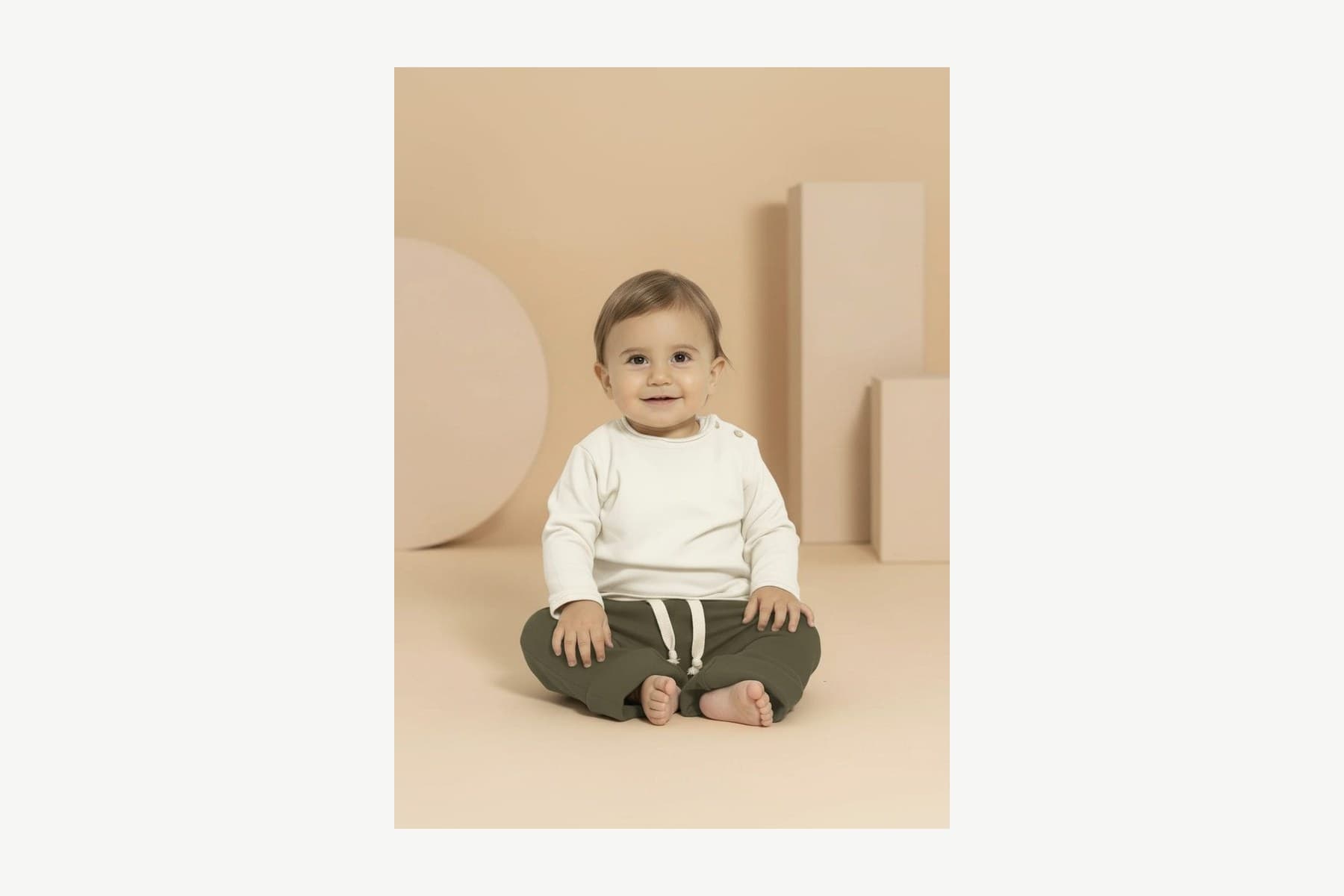
There’s a moment, somewhere around the eighth month of waiting, when every parent finds themselves in front of the washing machine with a brand-new layette in hand and a question: how do you wash a newborn’s clothes? Do you need a special detergent? At what temperature? And what about fabric softener?
The good news: it’s simpler than it looks. This guide covers the first wash of the layette, the everyday routine, the classic stains (all of them) and the care of delicate pieces — muslin, linen, velvet and knitwear — so they last until the next little brother comes along.
In short:
- Every new piece gets washed before it’s worn, including the ones just unwrapped: at 30°C with a gentle detergent.
- The right detergent is neutral, with no harsh fragrances and no optical brighteners; in the first months, fabric softener is better left out.
- Standard temperature: 30–40°C. High temperatures are only for particular cases, not for the routine.
- Baby stains (milk, baby food, “accidents”) give way to one weapon only: immediate pre-treatment in cold water.
- Pieces in natural fibres, washed with care, last for years: it’s the wrong wash that shortens a garment’s life, not wearing it.
Do new clothes need washing before a newborn wears them?
Yes, always. New pieces — even good ones, even still in their packaging — have travelled, been tried on, treated and handled. A 30°C wash with a gentle detergent removes manufacturing residues and dust, and leaves the fabric ready for the thinnest skin there is. That goes for the whole layette (here’s our guide to what you actually need) and for every piece you’re given as a gift.
The right moment: in the last weeks of waiting, so the layette comes into the house already prepared. Wash, hang out, fold: for many parents it’s the first official ritual.
Which detergent should you use for baby clothes?
The direct answer: a gentle, neutral detergent, liquid or powder, with no strong fragrances, dyes or optical brighteners. You don’t necessarily need a “baby detergent”: you need a simple formula, well rinsed out. Three practical rules:
- Use a small dose: overdosing leaves residues in the fabric — and against the skin those irritate more than the detergent itself.
- No fabric softener in the first months: it coats the fibres with scented substances and reduces the absorbency of bodysuits and muslins. Real softness comes from good natural fibres — cotton muslin, for example, becomes softer with every wash all on its own.
- An extra rinse if your machine offers one: with a newborn it’s the option that always pays off.
What temperature should children’s clothes be washed at?
The rule above all others: 30 degrees is almost always enough. Modern machines and detergents clean well at low temperatures, colours last longer and fabrics don’t felt. Keep 40–60°C for the cases that genuinely need it (a bug going round nursery, very dirty white cotton pieces) — not for the routine.
How to remove the classic stains (milk, baby food, grass and the rest)
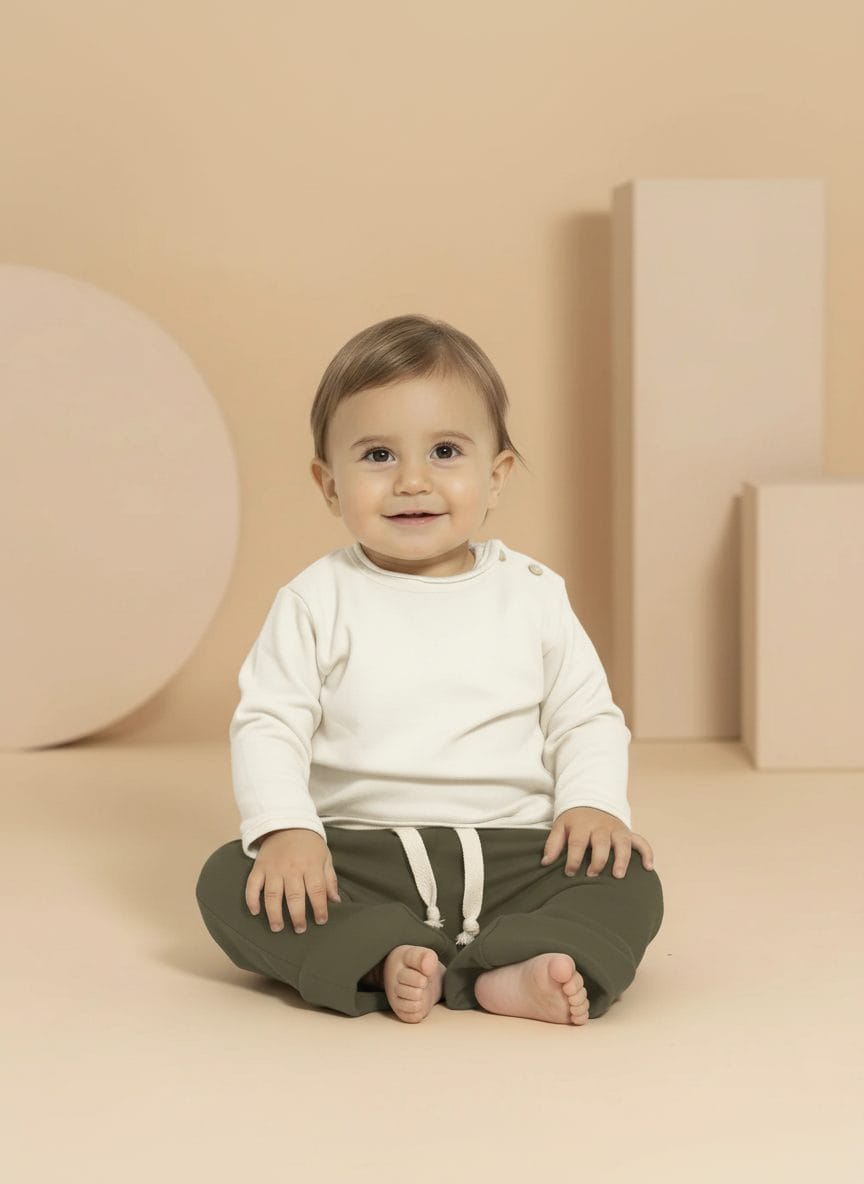
The universal principle: act immediately, with cold water. Heat sets proteins (milk, egg, baby food) and turns a passing stain into a permanent one. Then, stain by stain:
- Milk and spit-up: an immediate rinse in cold water, then a normal 30°C wash. If it has already dried: soak in cold water with a trace of detergent, never hot water.
- Baby food, fruit, tomato: lift off the worst of it, cold water through the back of the fabric, a drop of gentle detergent on the stain, fifteen minutes of patience, then into the machine. Sunlight on the damp garment as it hangs works as a natural stain remover on yellowish traces.
- The nappy accident: remove, rinse in cold water, a short soak with detergent or percarbonate (from six months of the garment… of the baby, anything goes), then a normal wash. Sodium percarbonate is the gentle ally of whites.
- Grass and soil (from the park months onwards): pre-treat with neat detergent on the dry stain, wait, then wash. Grass gives way to pre-treatment, not to temperature.
- Ice cream and chocolate: scrape off, cold water through the back, pre-treat, 30°C. (It happens more often than anyone plans for: we know something about that from our day trips.)
What not to use on little ones’ clothes: chlorine bleach, harsh scented stain removers, and the boiling water that “definitely gets it out” — it’s the quickest way to set a stain and cook a fibre.
Drying and storing: the forgotten half of care
- Hang everything out as soon as the cycle ends: natural fabrics relax and the creases drop out on their own — muslin and textured cotton don’t ask for an iron.
- Sun, yes, but with judgement: it sanitises and brightens whites, and fades strong colours — those go in the shade or inside out.
- Tumble dryer sparingly: it shortens the life of elastic and felts delicate fibres; if you need it, use the delicate programme and take pieces out while still damp.
- Knitwear flat: handmade cardigans and jumpers dry laid out on a towel, never hung up (they lose their shape).
- Store them clean: pieces for the next size or the next season go away washed and thoroughly dry, in cotton or tissue paper — never in sealed plastic.
Frequently asked questions
Should a newborn’s clothes be washed separately from the family’s?
For the first 2–3 months it’s a good habit, above all so you can use the gentle detergent and the extra rinse on the whole load. After that you can put the baby’s washing in with the family’s, keeping a neutral detergent and low temperatures for the whole mixed load.
How long do clothes last if they’re washed properly?
A well-made cotton or muslin piece comfortably handles two or three “careers”: the first child, the younger sibling, often a little cousin as well. It’s the quiet arithmetic of quality: a piece made well and cared for well costs less than three cheap ones bought to replace each other.
Can the velvet of ceremony pieces go in the washing machine?
Almost always yes, at 30°C inside out on a delicate cycle — but the label on the individual piece is what counts. No tumble dryer and no direct iron: steam held at a distance lifts the pile. That way the ceremony dress arrives perfect for the next occasion.
How do I get the musty smell out of stored clothes?
A 30°C wash with half a dose of detergent and a spell drying in the open air. For pieces put away for a long time, this is exactly the start-of-season ritual: wash, air, begin again.
Do nursery clothes need sanitising?
The 30–40°C routine is enough. When something is going round the group (it happens, it comes with nursery life) you can go up to 60°C for cotton bodysuits and underwear — checking the label — or add a percarbonate-based sanitiser.
Washing a child’s clothes is, in the end, an act of care you learn quickly: lukewarm water, a light touch and natural fibres do almost all of it by themselves. The time saved on ironing is time gained for the grass.