Farway Journal
Nursery: what you really need — the complete list
The complete nursery list: the spare changes of clothes, the non-slip socks, the comfort object and the right clothes for days spent playing. With advice from the nursery staff and the art of the name label.
6 August 2026
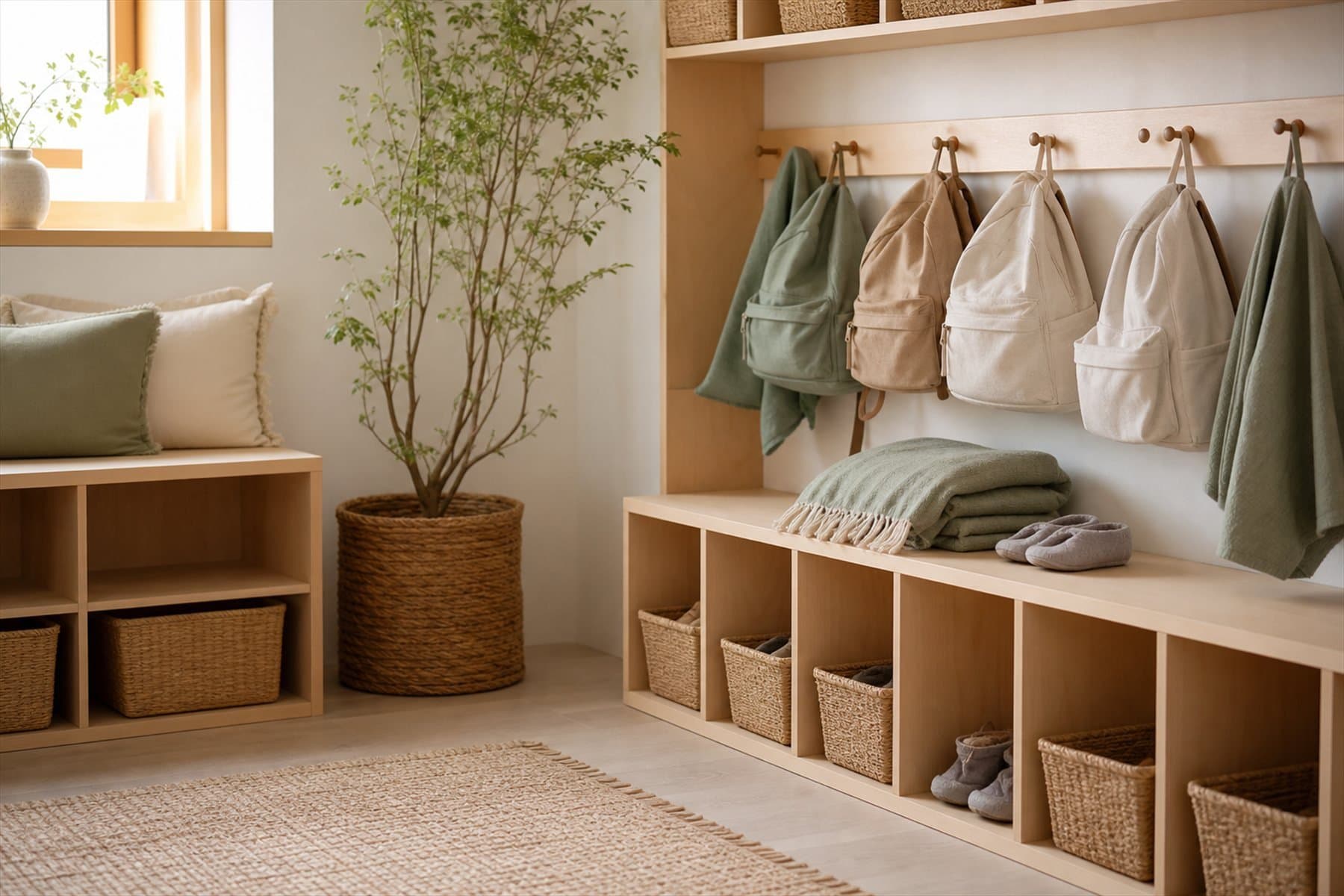
The nursery’s email usually arrives in August: “Dear parents, please find attached the list of items for the settling-in period”. And with it, the questions: how many changes of clothes are needed? Which clothes count as “comfortable” for nursery? What do they mean by “label everything”?
After listening to parents and nursery staff, this is the guide we would have wanted first time round: the complete list of what you need for nursery, the right clothes (and the ones best left at home), and the tricks the carers never have time to explain at the introductory meeting.
In short:
- The universal basics: 2–3 complete changes of clothes always in the locker, non-slip socks, a comfort object and (if requested) cot sheets for nap time.
- The perfect nursery clothes are comfortable, washable and independence-friendly: elasticated waists, no fiddly little buttons, no pieces that “mustn’t get dirty”.
- Label everything, from bodysuits to shoes: at nursery, identical garments multiply mysteriously.
- Every nursery has its own list: this guide covers the standard one — your nursery’s list is the one that counts.
The standard list: what (almost) every nursery asks for
- 2–3 complete changes of clothes in a fabric bag: bodysuit, t-shirt or long-sleeved bodysuit depending on the season, trousers or leggings, socks. Top them up every Friday.
- Non-slip socks for the shoe-free play areas — the most forgotten item in Italy.
- A cot sheet and a blanket for the nap-time cot (many nurseries ask for them, some provide them).
- Bibs with elastic, or the practical sleeved ones, depending on what the nursery asks for.
- The comfort object: the comforter, the dummy in its little box — the most important item on the list, and not one to wash the night before (the smell of home is its superpower).
- Nappies and creams, if the nursery doesn’t provide them; a hat for the garden.
- Boots or outdoor shoes and, at nurseries that go out in all weathers, a rain cape.
All of it inside a small rucksack or a bag that your child learns to recognise: it is the first piece of their independence.
How should you dress a child for nursery?
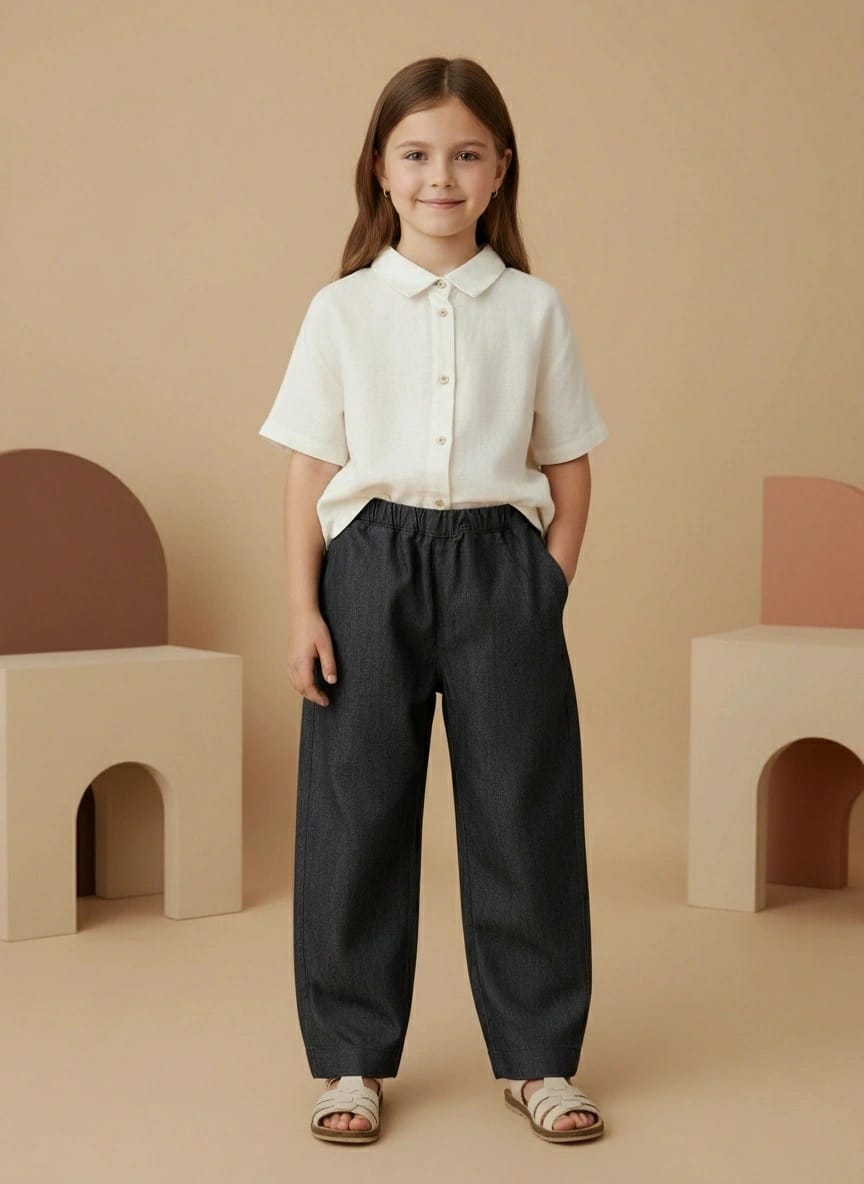
The rule is set by what a nursery day involves: painting, meals, the garden, nap time. So:
- Elasticated waists, no obstacles: trousers and leggings that come down in one movement — for quick changes and, later on, for potty training. Dungarees and belts: lovely, on a Saturday.
- Simple layers: bodysuit + top + sweatshirt or a cardigan that opens at the front. The nursery staff are looking after twenty children: every easy zip is an act of collective kindness.
- Natural, washable fabrics: cotton and cotton sweatshirt fabric stand up to paint and tomato sauce, wash at 30° and go straight back into play (the laundry guide works overtime here).
- No “precious” pieces on nursery days: poster paint goes wherever it likes. Occasion pieces stay for the occasions — and children learn the difference early, which is already a small education in elegance.
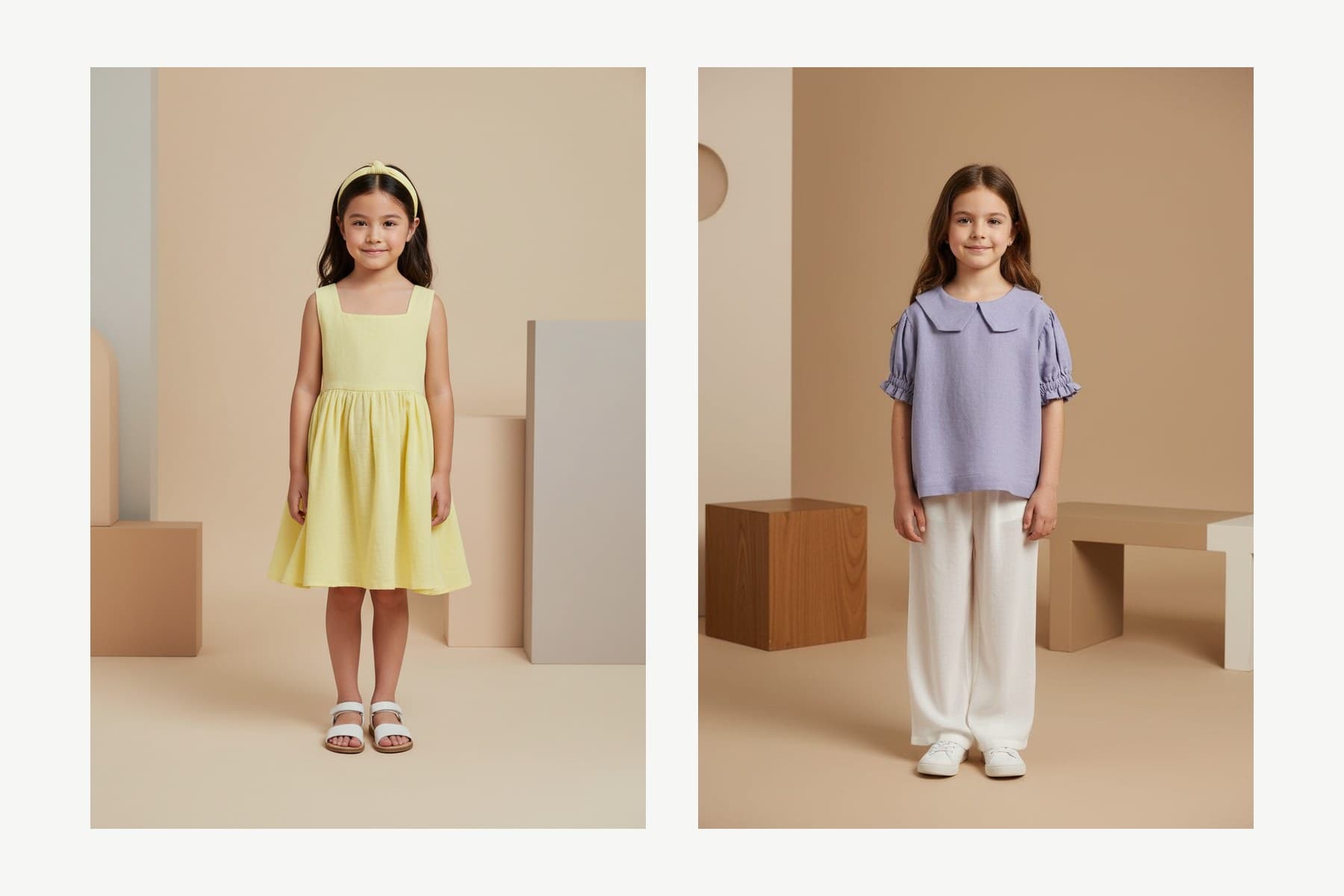
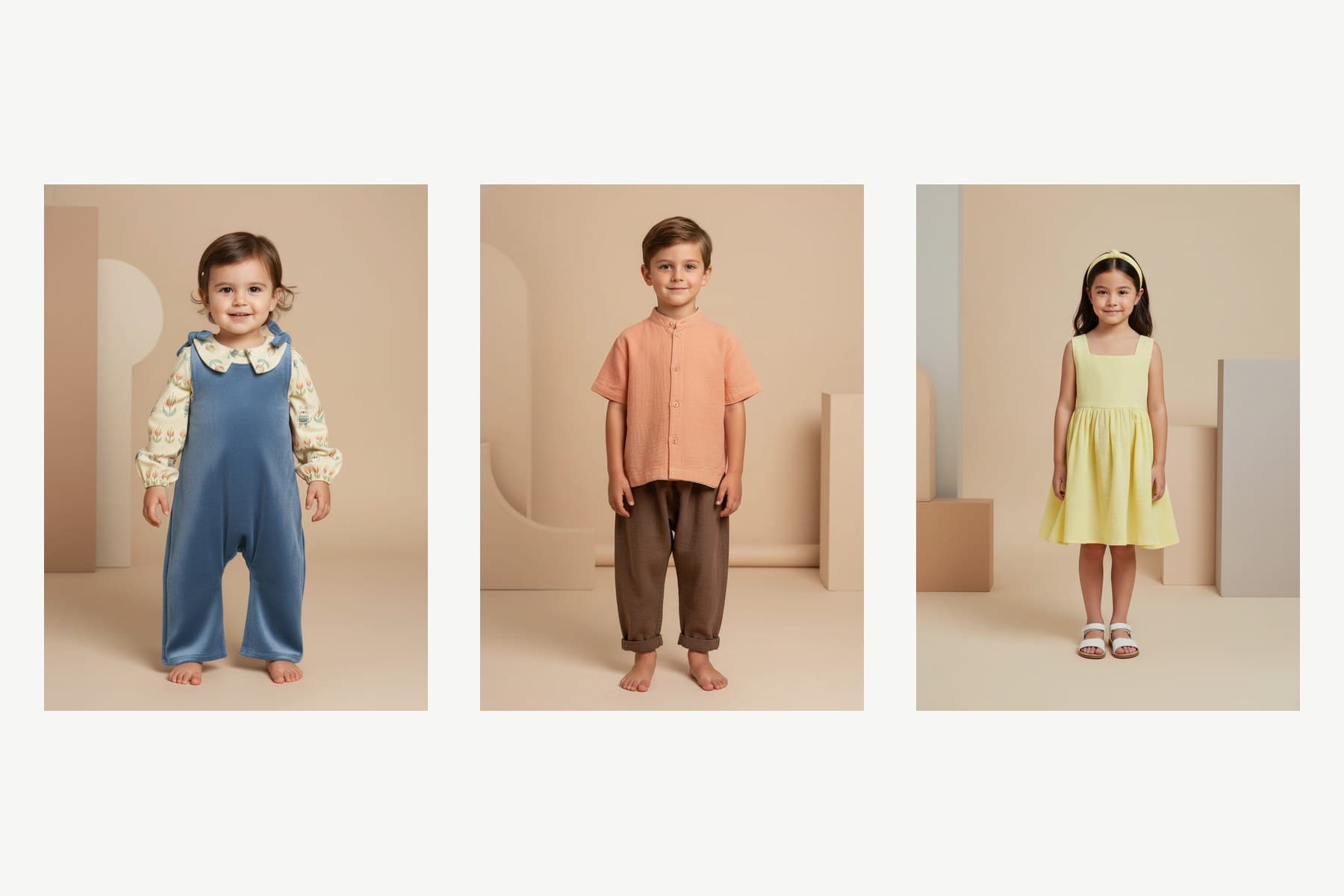
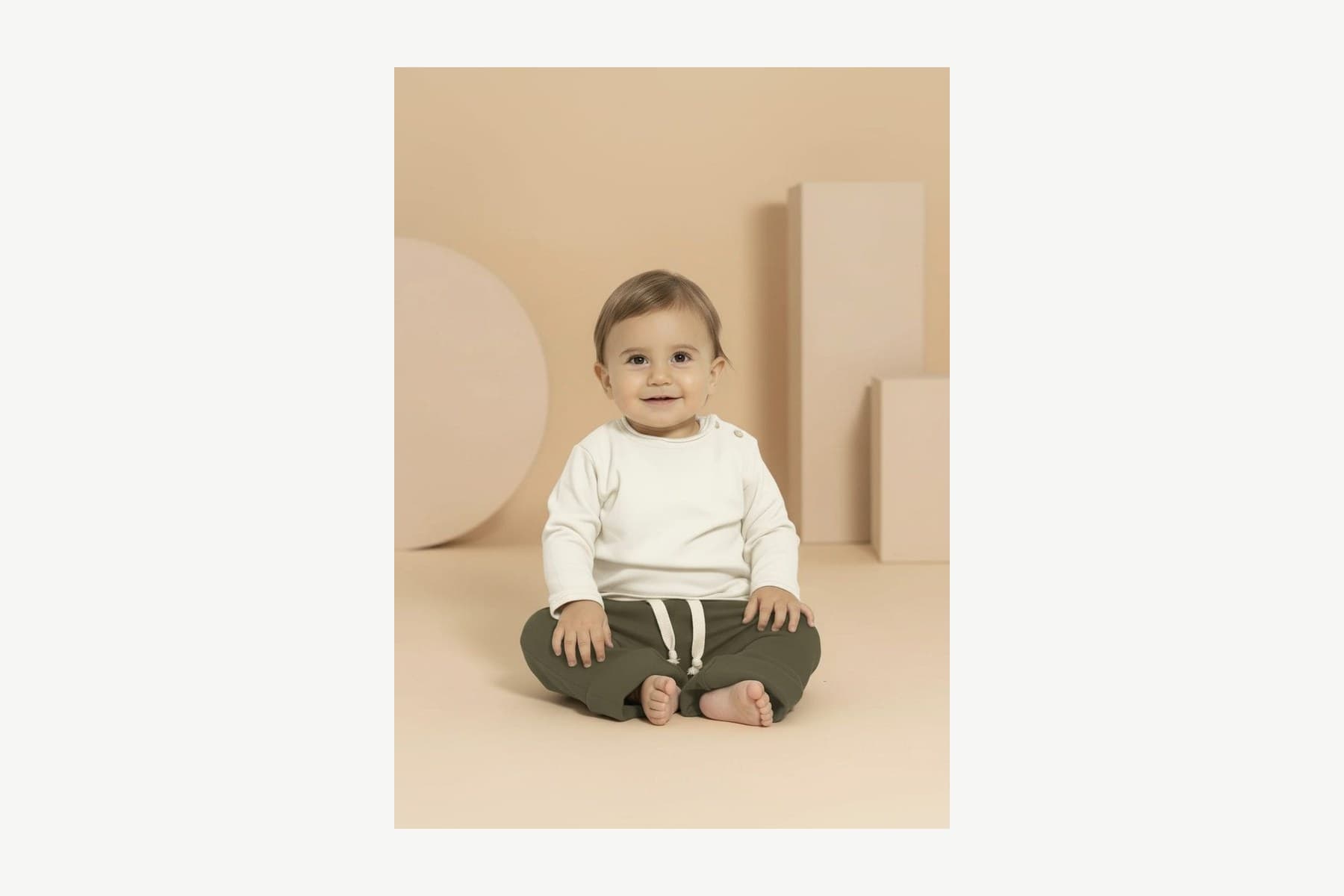
- Comfortable does not mean scruffy: a well-made pair of soft trousers and a top in good cotton dress everyday life with the same care as always. The Farway pieces best suited to nursery live among trousers, t-shirts and sweatshirts and knitwear: comfortable cuts, forgiving colours, quality that holds up to the washing cycles the job demands.
The art of the label (literally)
At nursery every piece has to be labelled with your child’s name: iron-on labels go on in three seconds and survive the wash; sewn-in ones last forever and get passed down to a little brother; permanent marker on the inner label is the 23:50-the-night-before version — and it works too.
Label everything: bodysuits, socks, shoes, dummy, blanket, rucksack. The first unlabelled piece to go missing enters a limbo from which no bodysuit has ever returned.
The locker’s change of season
The nursery locker follows the seasons like the wardrobe at home, a month ahead:
- September–October: in-between seasons — long-sleeved bodysuits, sweatshirts that open at the front, long trousers; the garden is still in use.
- Winter: warm but manageable layers; the heavy jacket stays on the peg, indoors cotton and a sweatshirt are enough.
- Spring: lighten the layers — and top up the changes of clothes: puddles are a season of their own.
- June–July: light cotton and muslin, a hat on at all times, one extra change of clothes for water play.
Frequently asked questions
How many changes of clothes are needed for nursery?
Two or three complete ones always in the locker, right for the season, to be checked and topped up every week. During the potty-training months, go up to three or four: it is an investment in everyone’s peace of mind.
Bodysuits or t-shirts for nursery?
For the first two years the bodysuit is still king: it keeps the back covered during floor play and restless naps. At around two and a half, with potty training on the horizon, you move on to a t-shirt and underpants: independence in the bathroom will thank you.
What shoes are needed at nursery?
Indoors: non-slip socks or soft slippers, depending on the nursery. Outdoors: comfortable shoes with Velcro fastenings — never laces — and boots for wet days. Everything labelled, including the soles if need be.
Can I send my child to nursery dressed smartly?
Everyday nursery life calls for work clothes (play is their work): comfortable and washable. Real elegance at nursery is the invisible kind of quality — natural fabrics, seams that hold — not the delicate piece. For nursery parties, though, the good outfit is welcome: they are the first official occasions of a child’s social life.
What NOT to take to nursery?
Jewellery and bracelets (they get lost, they can hurt), belts and braces (they slow the changes down), pieces with long drawstrings (safety), toys from home if the nursery doesn’t allow them — with the sacred exception of the comfort object.
In the end, the nursery list tells us something lovely: a child is starting to have a wardrobe for their life, not just for ours. On how to get through the first days — the goodbyes, the tears (often the parents’) — we come back next week with the guide to settling in.