Farway Journal
First communion dress for girls: a guide to choosing
How to choose a first communion dress for a girl: the tunic question, natural fabrics, the right time to buy, shoes and accessories, and the dress’s second life after the ceremony.
10 June 2026
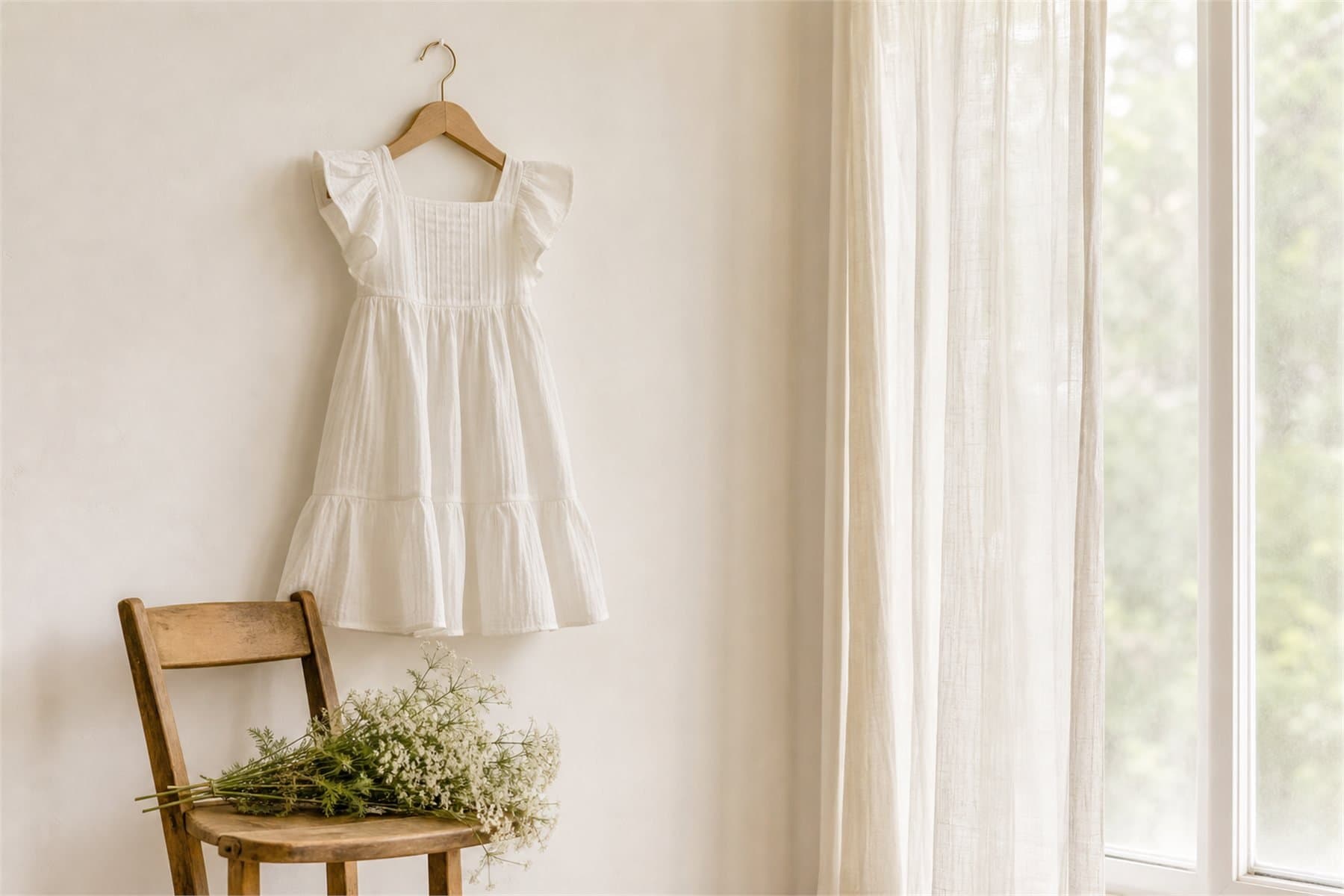
A first communion is a day girls remember for the rest of their lives — and the dress is an integral part of it. Not because it has to be lavish, but because it is one of the first dresses a girl really chooses herself, with her own ideas and her own taste starting to show.
This guide is here to help you work through the choice calmly: timing, fabrics, styles and the practical questions — tunic or no tunic? white or not? what happens afterwards? — that every family ends up asking at some point in the year.
In short:
- First thing to check: whether the parish requires a tunic over the dress — it changes how you choose.
- The right timing: dress chosen 2–3 months ahead, full rehearsal at home a month before.
- The dresses that age best in photographs are the simplest: clean lines and natural fabrics (muslin, voile, linen).
- Flat shoes already broken in and a single accessory in her hair: the elegance of a first communion lies in restraint.
First question: is a tunic needed?
Many parishes today ask for the same tunic for everyone over the dress, to move the attention from what the children are wearing to the rite itself. It is the first thing to check, because it changes the approach: with a tunic, the dress underneath can be simpler and come into its own at the restaurant and in the family photographs; without one, the dress takes centre stage from the start.
Either way, the rule stays the same: comfort before anything else. The day lasts ten hours.
Style: simple today, beautiful for ever
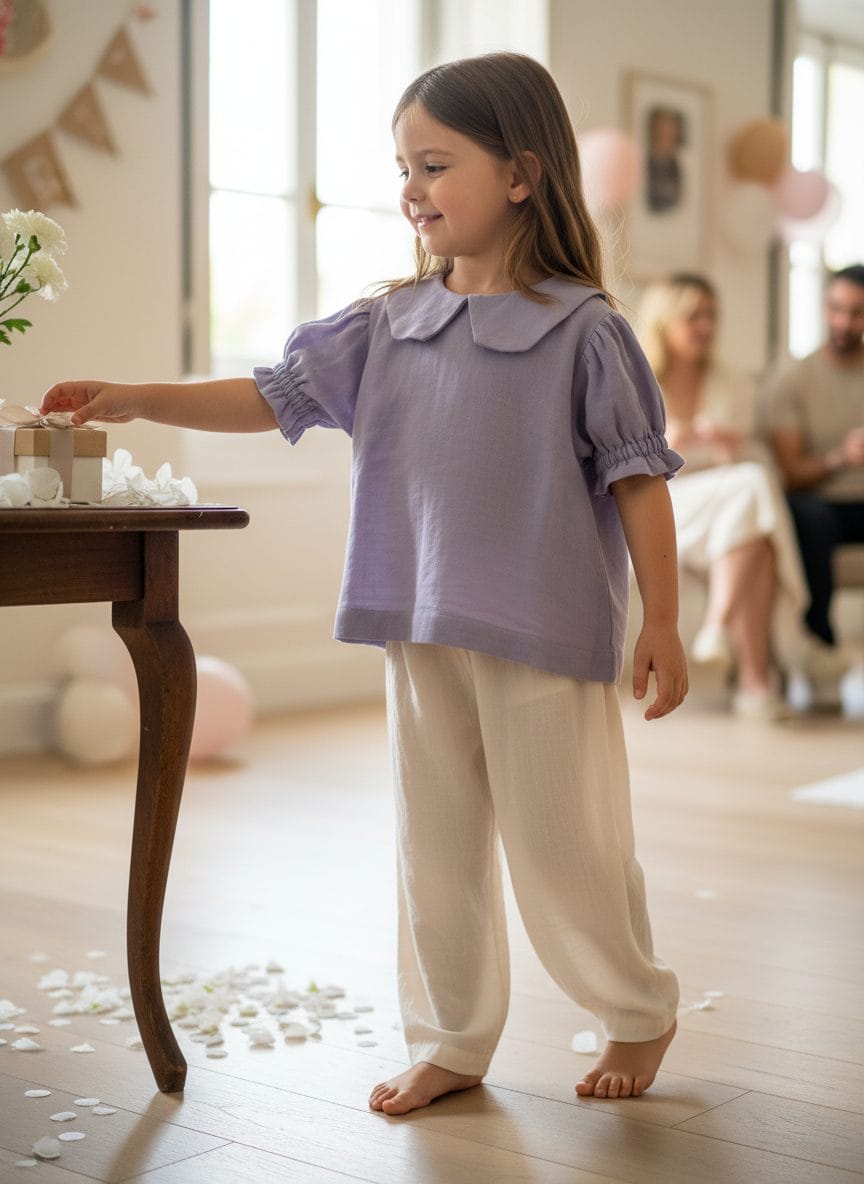
First communion photographs get looked at for decades: the dresses that age best are the simplest. Clean lines, natural fabrics — muslin, cotton voile, fine linen — and measured details beat heavy embroidery and layers of tulle, which ten years on mostly tell you about the fashion of that particular year.
White is the tradition but not an obligation, especially for guests and sisters: cream, ivory and the lighter dusty shades work just as well.
The right timing for the choice
- 2–3 months before: choose and order. Sizes 7–12 years in the more carefully made ranges sell out early, at the height of the season.
- 1 month before: a full rehearsal at home — sitting, standing, walking. Any alterations can then be made without rushing.
- The week before: shoes broken in, accessories decided, dress pressed and hanging up. Nothing left to think about.
Shoes and accessories: restraint wins
Flat shoes, or with a hint of a heel, already worn for a few afternoons. For her hair, one detail is better than several: a slim headband, a fabric bow, a plait with a ribbon. A first communion is not a wedding in miniature — its elegance lies precisely in that restraint.
And boys? (the version for him)
For boys the formula is well tested: a good cotton or linen shirt, soft classic trousers, and a waistcoat or light jacket if the season calls for it. Here too the tunic, where the parish uses one, makes things simpler: underneath, what counts is being comfortable and tidy for the rest of the day. For sisters, brothers and young guests, the advice in the guide to ceremony dresses applies.
After the first communion: the dress’s second life
A dress chosen well does not retire with the ceremony: it comes back for summer weddings, for big occasions, for family photographs. That is another good reason to prefer simple lines and real fabrics: they are worn again without a second thought, and handed down with pride.
The Farway dresses suited to a first communion — girls’ dresses from 7 to 12 years in muslin, voile and linen — are gathered in the First Communion collection.
Frequently asked questions
How much do you spend on a first communion dress?
The market runs from fast fashion pieces to atelier dresses. The point of balance is a dress in natural fabrics and careful workmanship, one that holds up through the day and through the occasions that follow: an outlay that pays for itself through reuse, instead of being used up in a single day.
She is making her first communion in a tunic: does the dress underneath matter?
Yes, for the whole rest of the day: the tunic comes off on the way out of church, and from then on — lunch, photographs, the party — the dress is what everyone sees. Better to choose one that is cool and comfortable, thinking about the long hours rather than the aisle.
An early morning first communion: how do you handle the wake-up and the dress?
Breakfast in pyjamas, getting dressed as the last thing, and a kitchen apron over the dress if breakfast runs long: veteran-parent tricks that save more dresses than any stain remover.
In the end, the perfect dress is the one that, in the photographs from that day, lets her be the one who shines.