Farway Journal
Milan museums children will love
Seven Milan museums that work beautifully with children: MUBA, where you touch everything, the submarine at the Museo della Scienza, the dinosaurs at Storia Naturale, the Acquario, the Castello, Hangar Bicocca and Brera, cut to family size.
10 June 2026
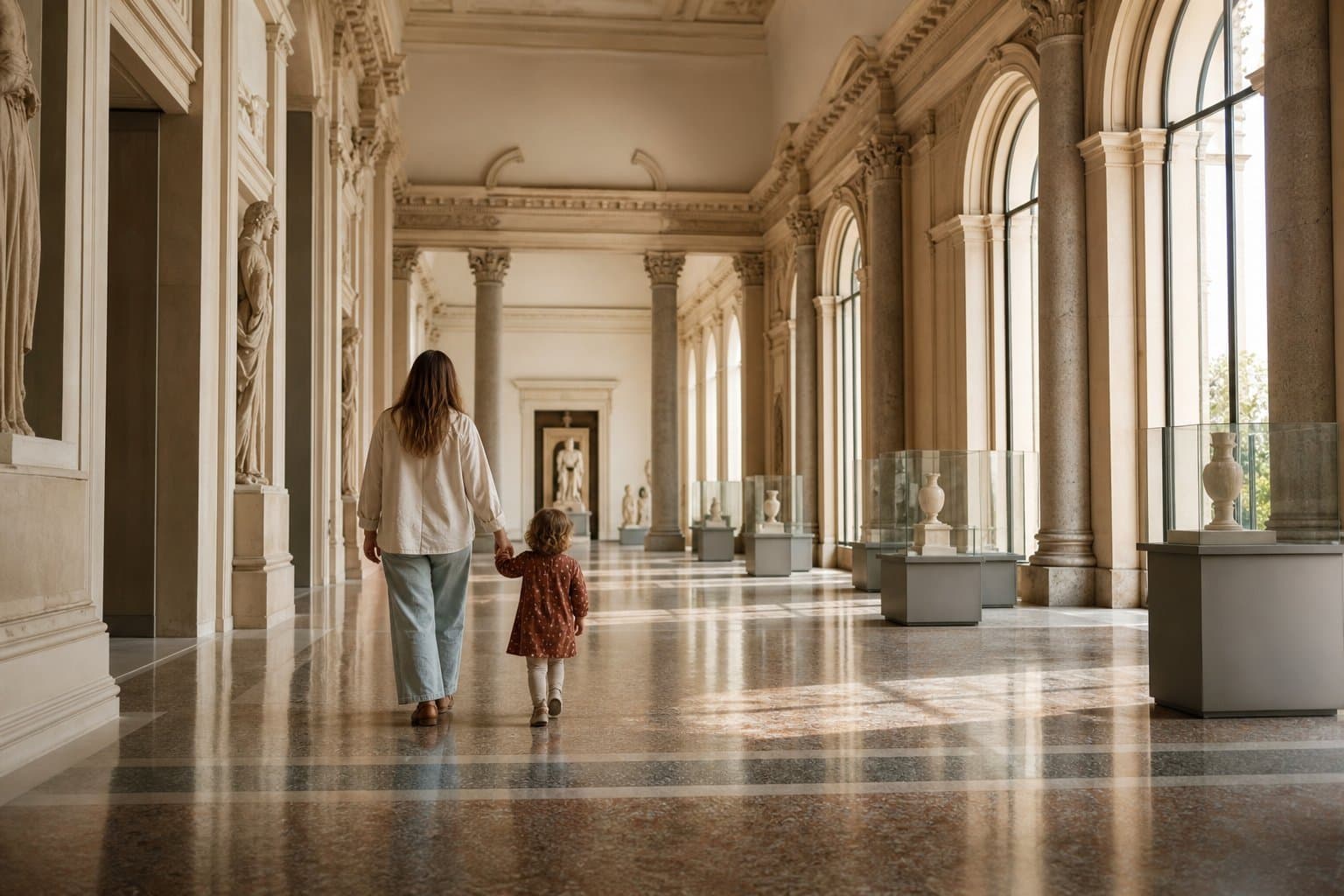
Taking children to a museum in Milan isn’t a rainy-day fallback: it’s one of the loveliest things you can do together in the city. As long as you pick the right museum — and leave before the wonder runs out.
Milan has one for every age and every character: museums where you touch everything, museums with real submarines, museums with dinosaurs, and art museums that, approached the right way, enchant even a four-year-old.
These are the seven we think children will genuinely love.
In short:
- Seven Milan museums children adore: MUBA, the Museo della Scienza e della Tecnologia (the science and technology museum, home of the Toti submarine), Storia Naturale, Acquario Civico, Castello Sforzesco, Hangar Bicocca and Brera.
- Hangar Bicocca is always free; at the civic museums under-18s get in free or nearly free.
- For a first time: the Acquario or MUBA under 4, Scienza e Tecnologia from 4–5 upwards.
- The strategy: early morning at the weekend, a few chosen rooms, out before the wonder runs out.
01 — MUBA, the museum where you touch everything
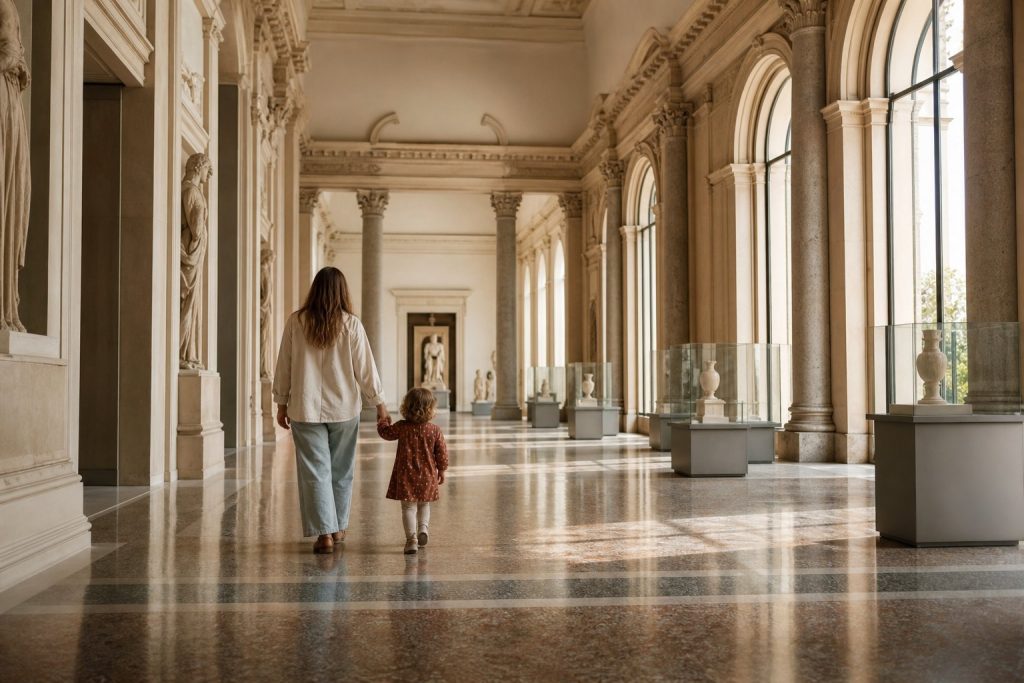
At the Rotonda della Besana, the Museo dei Bambini, Milan’s children’s museum, overturns the founding rule of every museum: here you touch, you build, you get messy. The play-exhibitions change through the year and are designed by age group, with guided routes of about an hour — exactly the span of a child’s attention.
The circular garden around the Rotonda is the ideal ending: you come out of the exhibition and run on the grass.
02 — Museo della Scienza e della Tecnologia, the one with the submarine
Italy’s largest science and technology museum is a wonderful labyrinth: the models of Leonardo’s machines, real steam trains you can almost climb aboard, the space section with fragments of the Moon and — every child’s heart-stopper — the Toti submarine, which you can visit from the inside, with its crawlways and its bunks.
You go in after breakfast and come out mid-afternoon without noticing. The weekend interactive workshops are worth booking.
03 — Museo di Storia Naturale, dinosaurs on Corso Venezia
Inside the Giardini Montanelli, the Museo di Storia Naturale, the natural history museum, is the classic that never disappoints: dinosaur skeletons, the room of minerals that glitter, dioramas with animals from half the world held still in scenes that look real. It’s a museum from another era in the best sense: you walk around with your nose in the air.
And on the way out there are the gardens: the little lake with the turtles, the rides and an ice cream. A whole day, half indoors and half out.
04 — Acquario Civico, small and perfect
Milan’s aquarium is one of the oldest in Europe and it is exactly the right size for the youngest: an hour is enough, the tanks are at child height, and the Liberty-style building — Italian Art Nouveau — with its marine friezes is already half the show. Admission costs little and it sits inside Parco Sempione: before or after, the lawn is compulsory.
05 — Castello Sforzesco, the museum that is a castle
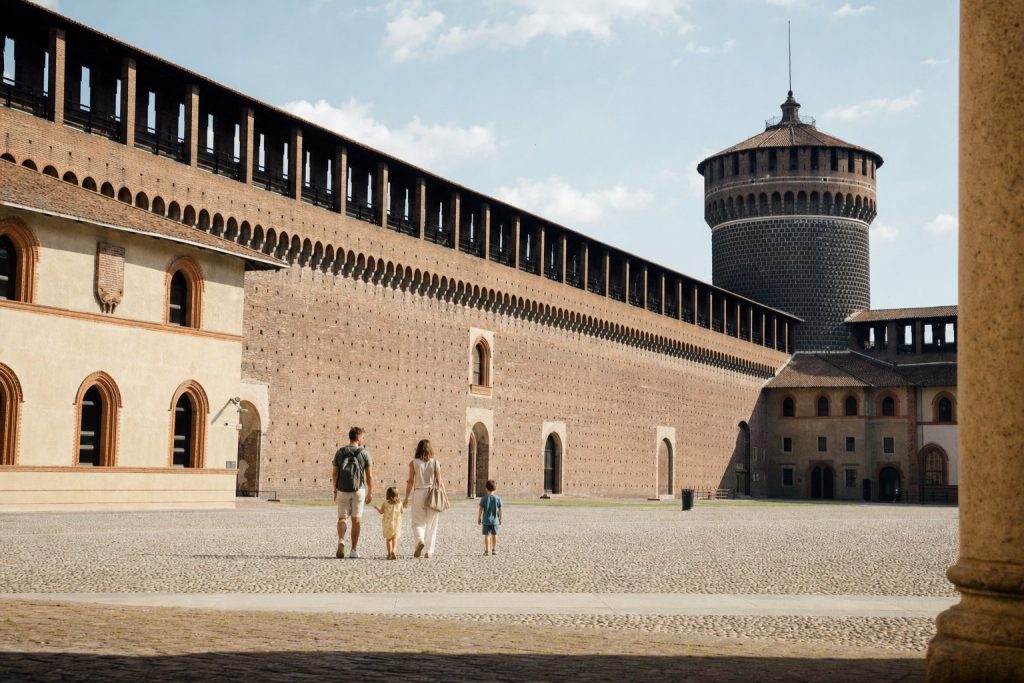
For a child the Castello Sforzesco isn’t a container for museums: it’s a real castle, with towers, moats, ramparts and courtyards to run in. Inside, the rooms of the civic museums are crossed like the rooms of a royal palace — armour, tapestries, painted ceilings — choosing a few things and letting curiosity lead the way.
The secret is not wanting to see everything: one courtyard, one room, one snack. The castle stays where it is; you can come back.
06 — Hangar Bicocca, the art that leaves you open-mouthed
An enormous former factory, dark and silent, holding soaring towers and installations that look like film sets. Hangar Bicocca is contemporary art, but children don’t know that: to them it’s a mysterious, giant place where you speak softly and look upwards.
Admission is free, and that removes any pressure to make the visit worthwhile: you go in, you marvel, you leave when the moment comes.
07 — Brera, the picture gallery built to a child’s scale (really)
It looks like the bravest choice, and it is the most surprising: the Pinacoteca di Brera gives families trails and materials designed for looking at paintings as a game — finding the hidden animals, counting the angels, inventing the stories behind the portraits. Half an hour of masterpieces, then a turn around the courtyard with the statue of Napoleon, and the loveliest neighbourhood in Milan for a snack.
How to dress them for an afternoon at the museum
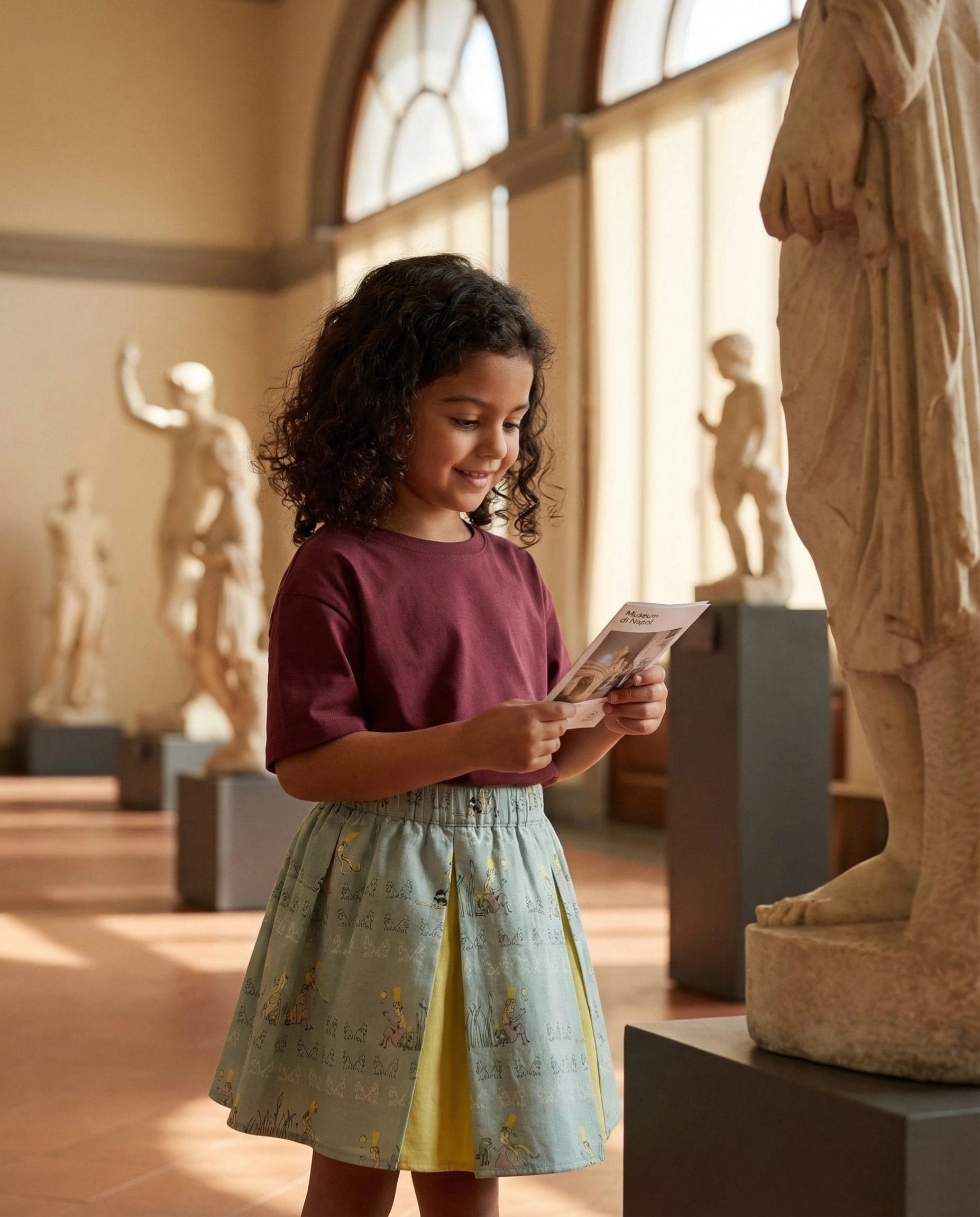
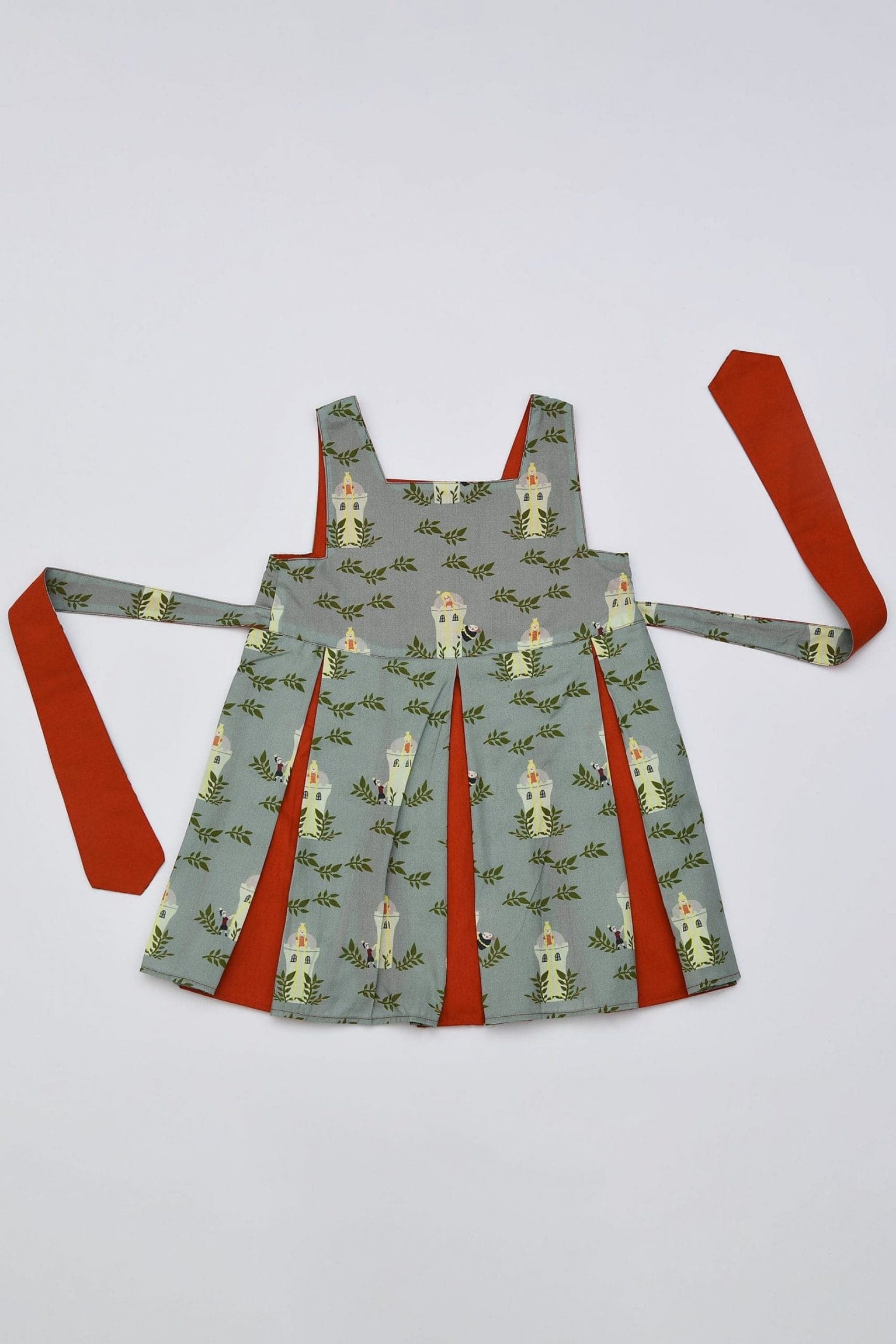
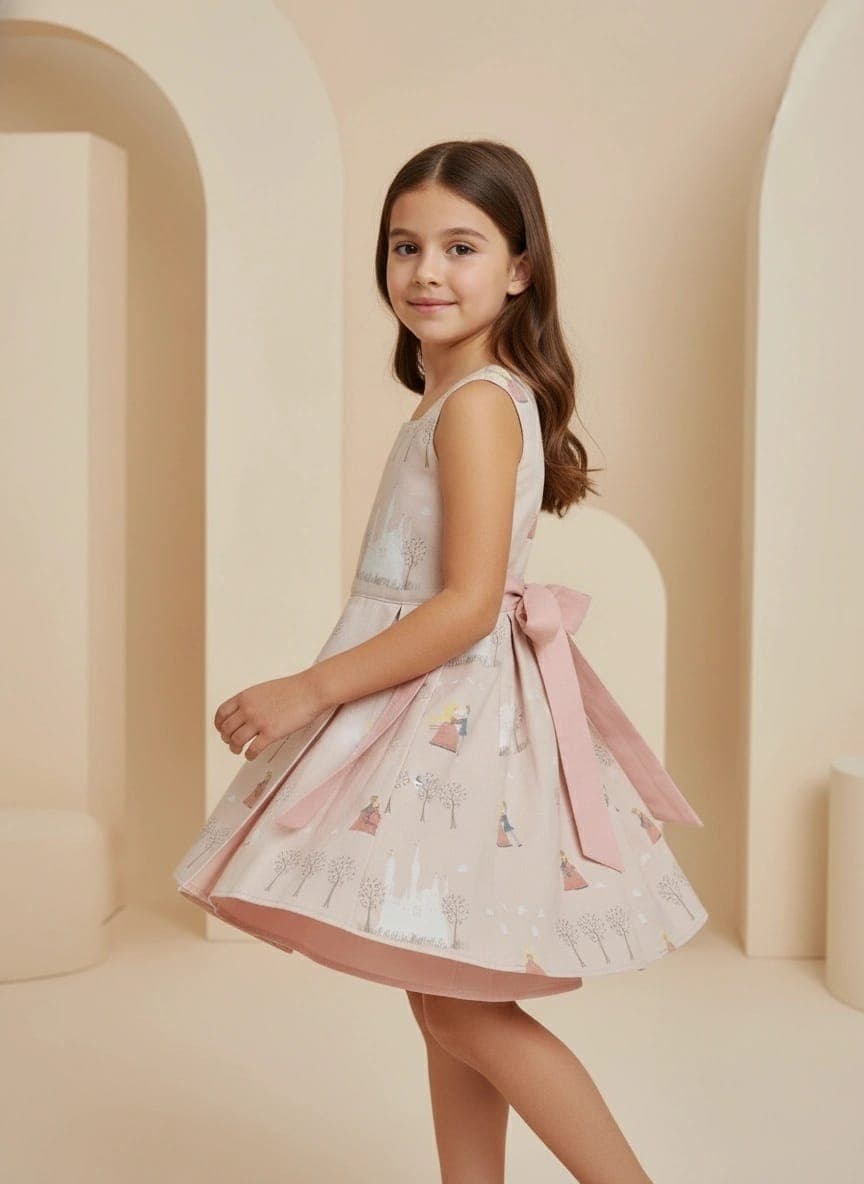
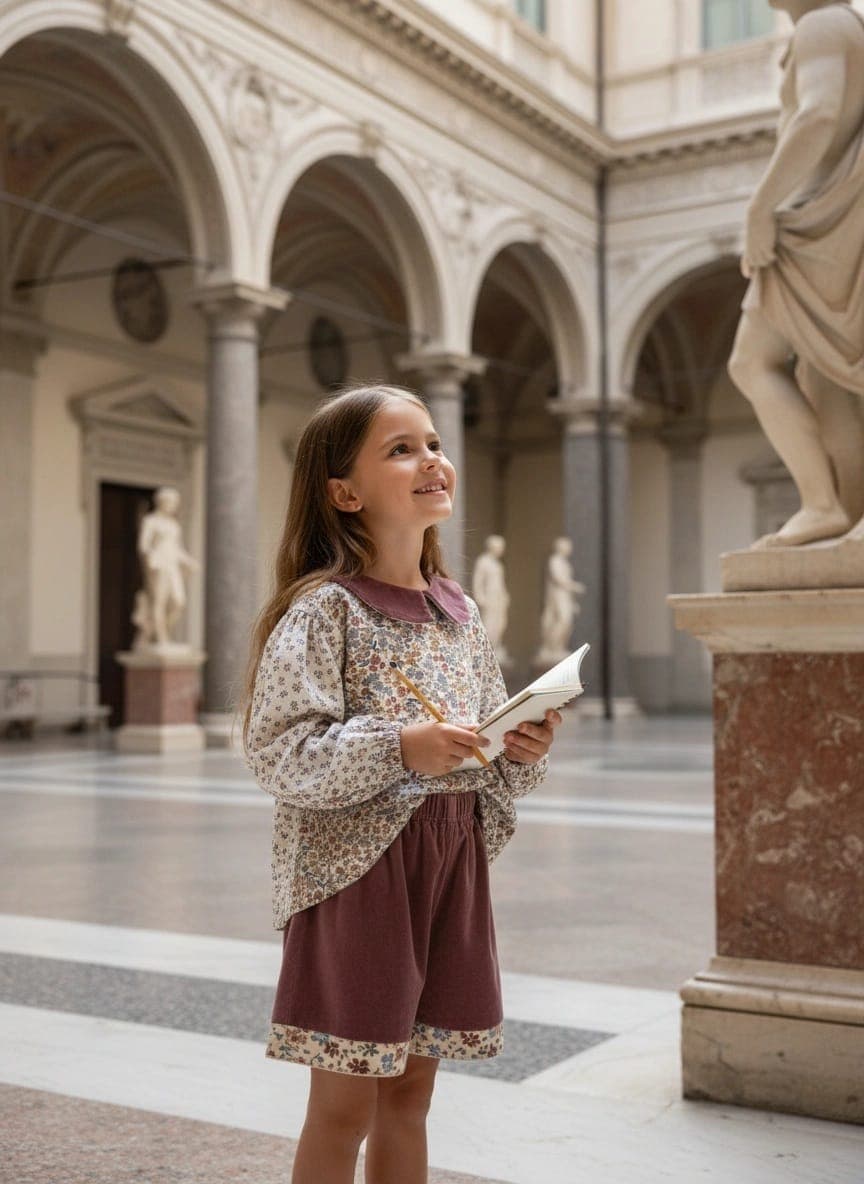
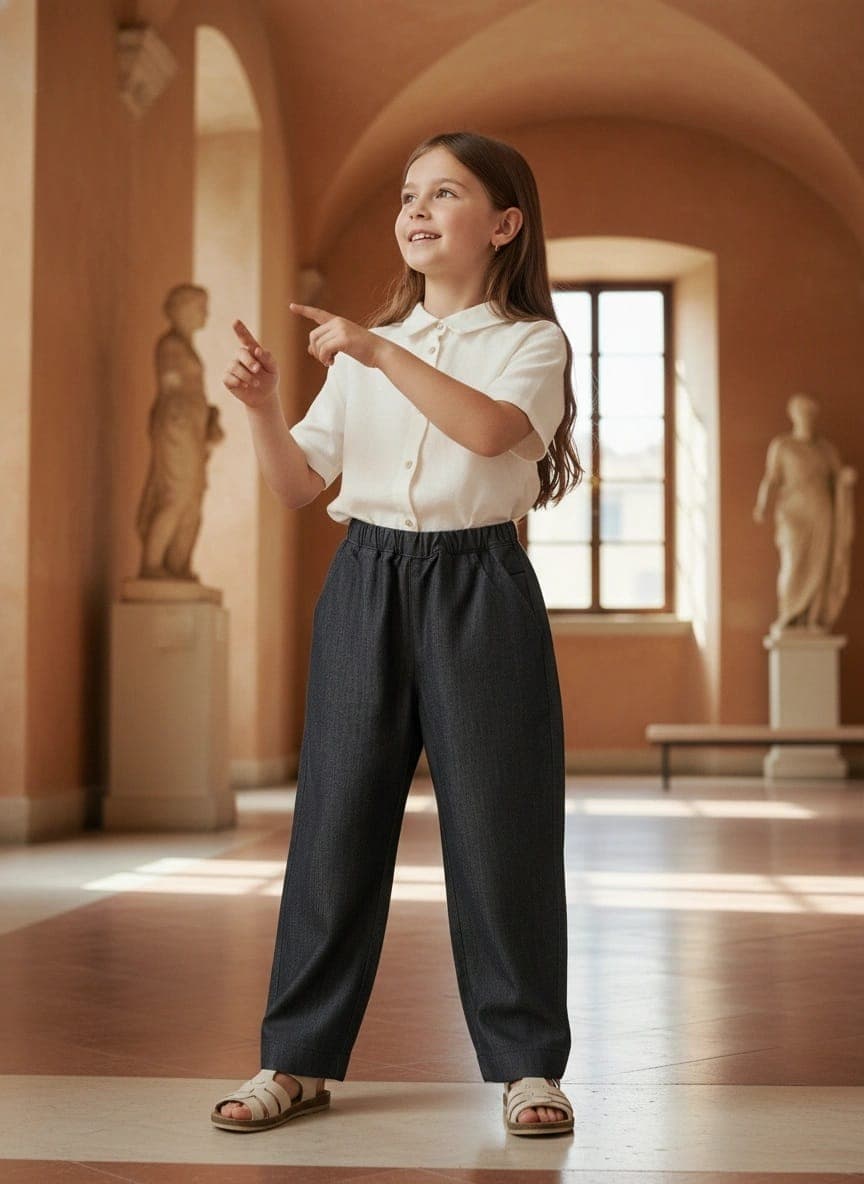
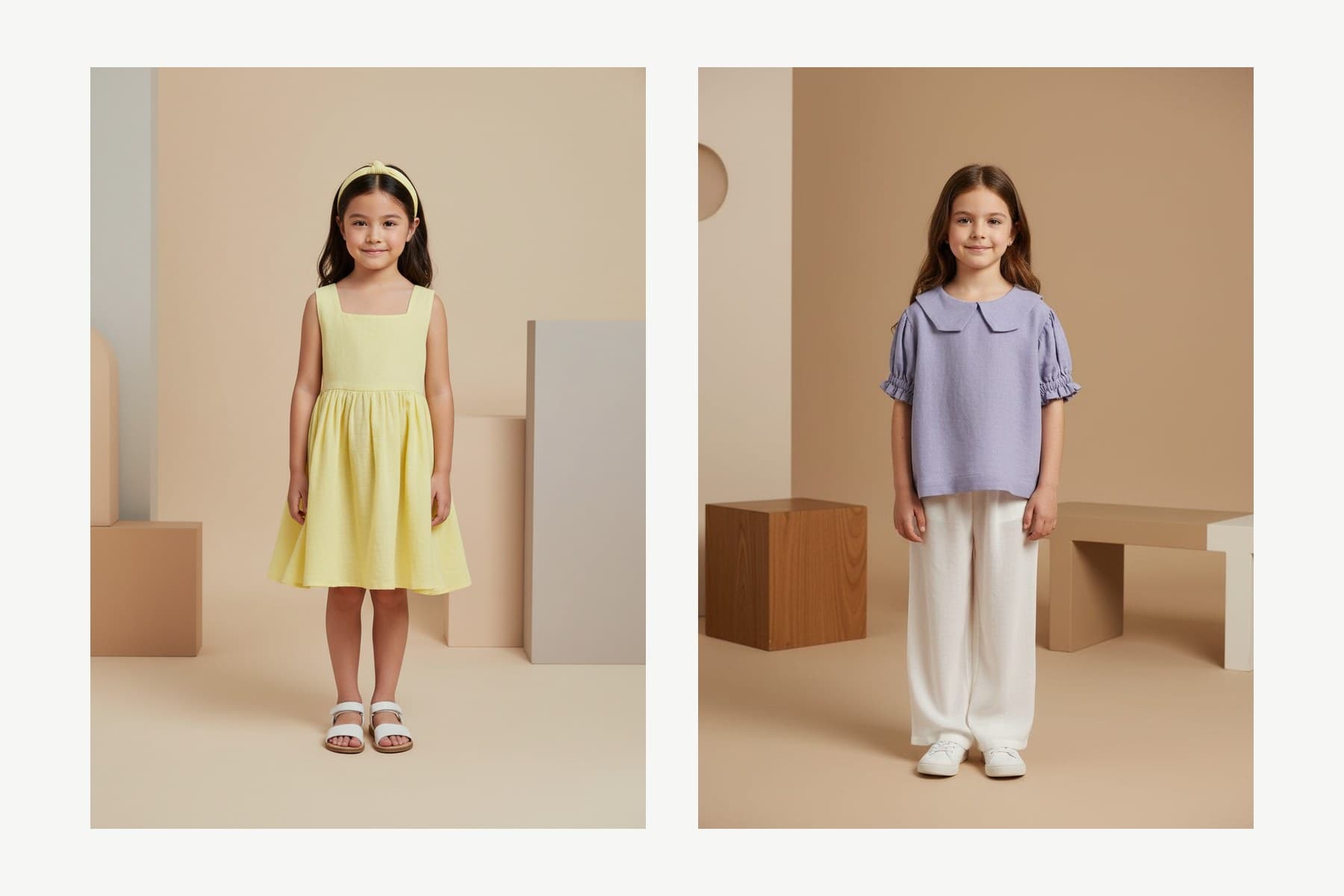
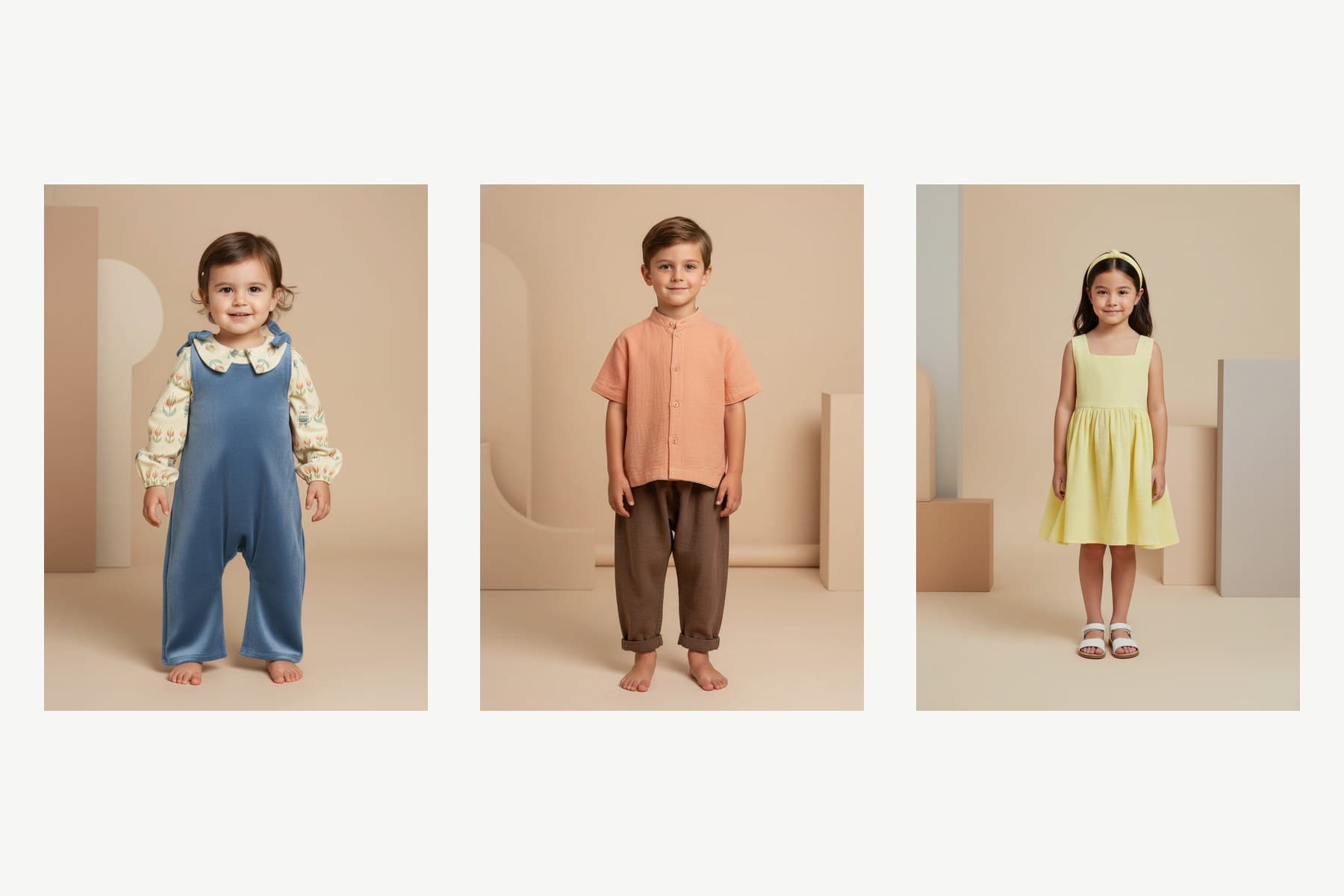
A museum asks for a gentle balance: smart enough for a special place, comfortable enough to walk for two hours. Natural fabrics that don’t leave them hot in the galleries, layers that come off easily at the entrance, quiet shoes. A soft shirt or a simple dress makes the day feel important — and children like that.
The pieces made for these outings are in the Afternoon at the Museum collection.
Frequently asked questions
Which museums in Milan are free for children?
Hangar Bicocca is free for everyone; at the civic museums — Castello, Storia Naturale, Acquario — under-18s get in free or nearly free, and on the first Sunday of the month entry is free for everyone at many state and civic museums.
Which museum is right for the first time?
Under 4, the Acquario Civico or MUBA: short, made for them, impossible to get wrong. Scienza e Tecnologia is the step up from 4–5 years and older.
Morning or afternoon?
Early morning at the weekend: emptier rooms, fresher children. And lunch after the museum becomes the moment for telling the story of it.
To build a whole day around the museum there’s our Milan with children itinerary; for addresses beyond the museums, the places we hold dear.
The perfect museum with children isn’t the one that teaches the most: it’s the one they come out of asking when you can go back.